Table of Contents
ToggleIndoor air quality isn’t just about comfort, it’s about health. Dust, pollen, pet dander, mold spores, and airborne germs circulate through every room of your home, especially if you’ve got forced-air HVAC or live in a high-pollen region. A GermGuardian air purifier tackles those contaminants with multi-stage filtration designed for real-world conditions. Whether you’re dealing with seasonal allergies, pet hair, or just want to reduce household odors, understanding how these units work and where to place them makes the difference between running a glorified fan and actually clearing the air.
Key Takeaways
- A GermGuardian air purifier uses multi-stage filtration with True HEPA, UV-C light, and activated carbon to remove 99.97% of particles as small as 0.3 microns, including dust, pollen, and airborne bacteria.
- Proper placement and room-size matching are critical—match the unit’s CADR rating to your space and run multiple units for whole-home coverage rather than relying on a single oversized purifier.
- Regular maintenance extends performance: replace carbon pre-filters every 2–3 months, HEPA filters every 6–8 months, and UV-C bulbs annually to maintain germicidal and filtration effectiveness.
- GermGuardian models operate quietly on low speed (40–50 dB) and require no ductwork or professional installation, making them ideal for renters and homeowners seeking immediate indoor air quality improvement.
- Avoid placement near walls, curtains, humidifiers, and direct sunlight to ensure unrestricted airflow and prevent UV-C bulb degradation.
What Makes GermGuardian Air Purifiers Stand Out for Homeowners
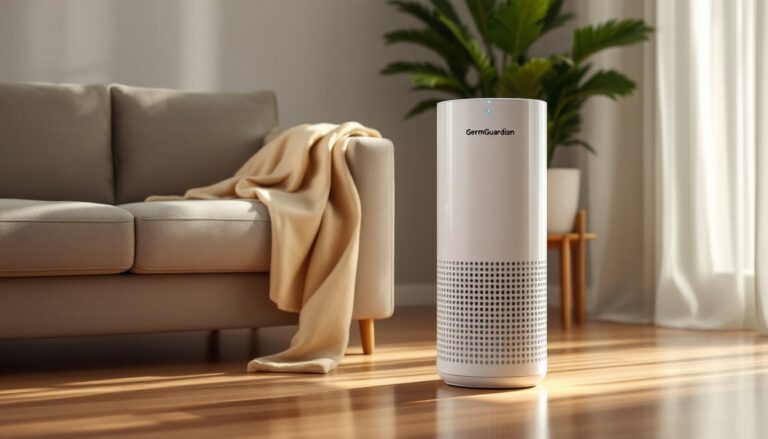
GermGuardian models combine True HEPA filtration, UV-C light sanitization, and activated carbon layers in a single tower or tabletop unit. That three-stage approach sets them apart from single-filter competitors. The HEPA layer captures 99.97% of particles as small as 0.3 microns, think dust mites, mold spores, and pollen. The UV-C bulb targets airborne bacteria and viruses that pass through the filter, and the carbon pre-filter handles smoke, cooking smells, and volatile organic compounds (VOCs) from paint or cleaning products.
They’re designed for plug-and-play use: no ductwork, no HVAC integration, no permit required. You unbox the unit, plug it in, and place it where you need coverage. That simplicity appeals to renters and homeowners alike. Most models run on standard 120V household current and draw between 40 and 120 watts depending on fan speed, so you’re not looking at a major spike in your electric bill.
Another advantage is noise control. On low speed, most GermGuardian towers operate around 40–50 decibels, quieter than a refrigerator hum, so you can run them overnight in bedrooms without disrupting sleep. High speed pushes 60–65 dB, comparable to normal conversation, which is acceptable for daytime use in living rooms or home offices.
Key Features and Technology Behind GermGuardian Models
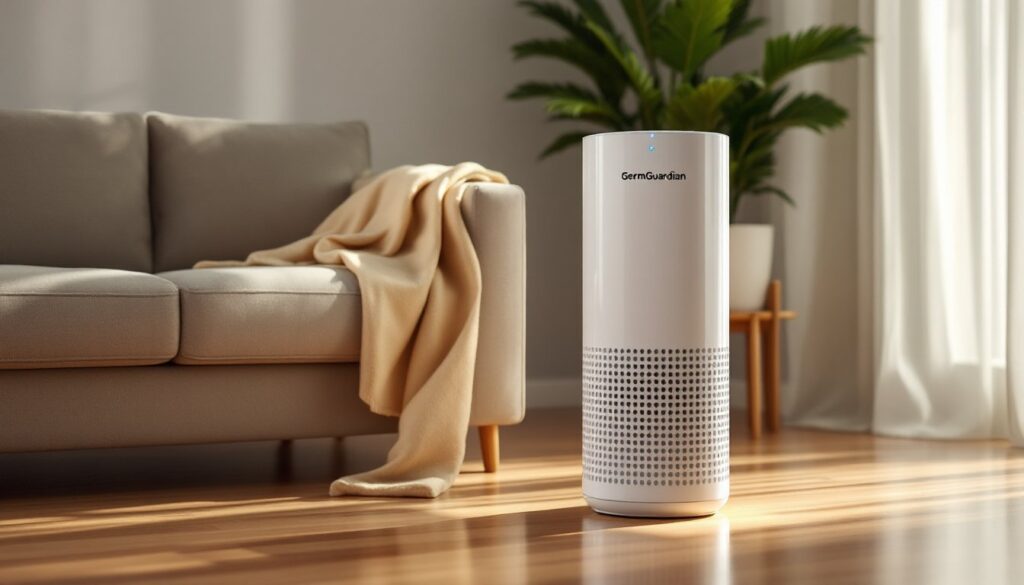
GermGuardian units share a common architecture: a cylindrical or tower enclosure with bottom or side air intake, a stacked filter assembly, and top exhaust vents. Airflow is driven by a brushless motor and centrifugal fan, which pulls room air through the filter stages and pushes clean air upward. The fan typically offers three to five speed settings, controlled by push buttons or a capacitive touch panel on the top or side of the unit.
Most models include a filter-change indicator, an LED that lights up after roughly 6–8 months of runtime (varies by usage and air quality). Some newer units add a PM2.5 air quality sensor that adjusts fan speed automatically when particle levels rise, though this feature is more common in mid-to-premium tiers.
Build quality is straightforward: ABS plastic housings, metal or nylon fan blades, and snap-fit filter chambers. You won’t find heavy steel construction, but the lightweight design (typically 8–15 lbs) makes relocation easy. Cord length runs about 6 feet, so you may need an extension cord depending on room layout.
HEPA Filtration and UV-C Light Technology
The True HEPA filter is a pleated media made from randomly arranged glass fibers that trap particles through interception, impaction, and diffusion. It’s not a mesh or screen, it’s a dense mat that forces air to navigate a tortuous path, capturing particles along the way. “True HEPA” means it meets the DOE-STD-3020-2015 standard for 99.97% efficiency at 0.3 microns, the most penetrating particle size.
Above the HEPA layer sits a UV-C germicidal bulb, typically a low-pressure mercury lamp emitting 254-nanometer ultraviolet light. UV-C disrupts the DNA and RNA of bacteria, viruses, and mold spores, preventing them from reproducing. Independent testing, including studies featured on CNET, shows UV-C effectiveness against certain airborne pathogens, though exposure time and intensity matter. In a fast-moving airstream, kill rates vary, so the HEPA filter still does the heavy lifting on particle capture.
The activated carbon pre-filter is a thin layer of granular or powdered charcoal bonded to a mesh backing. Carbon adsorbs odor molecules and light VOCs through a process called physisorption, molecules stick to the carbon’s porous surface. It’s not a permanent solution for heavy smoke or chemical fumes, but it handles everyday cooking smells and pet odors. Expect to replace this layer every 2–3 months for best results.
Choosing the Right GermGuardian Model for Your Home
Start by matching unit capacity to room size. GermGuardian publishes Clean Air Delivery Rate (CADR) figures for smoke, dust, and pollen, higher numbers mean faster air cleaning. A CADR of 100 is adequate for a 10 × 10-foot bedroom, while a 150 CADR handles a 12 × 15-foot space. For open-plan living areas or rooms with vaulted ceilings, look for CADR ratings above 200.
Consider whether you need extra features like a night-light mode, timer settings, or smart connectivity. Basic tower models (e.g., AC4825, AC5000) stick to manual controls and mechanical switches. Mid-range units add digital displays and programmable timers. Premium models integrate Wi-Fi, app control, and voice-assistant compatibility, though that adds $50–$100 to the price.
If you’ve got pets, prioritize models with a pet pure antimicrobial agent on the carbon filter, a proprietary treatment that inhibits bacterial growth on trapped pet hair and dander. For nurseries or bedrooms, look for units with a low-speed night mode and no glowing LEDs that can disturb sleep.
Room Size and Coverage Area Considerations
CADR ratings assume a single air change per hour in the specified room size. For allergy sufferers or high-pollen seasons, target four to five air changes per hour by choosing a unit rated for a larger space. A purifier rated for 200 square feet running in a 100-square-foot room cycles the air twice as often.
Ceiling height matters. Published coverage areas assume standard 8-foot ceilings. If you’ve got 10- or 12-foot ceilings, common in older homes or great rooms, multiply the floor area by the actual ceiling height and divide by 8 to get effective cubic footage, then size up accordingly.
Don’t forget doorways and airflow. An open floor plan with multiple connected rooms dilutes a purifier’s effectiveness. Close bedroom or office doors during operation to maximize filtration in the target zone. If you’re treating a master suite with an attached bathroom, close the bathroom door or run a second smaller unit.
Installation and Placement Tips for Maximum Effectiveness
Installation is as simple as removing packaging, unwrapping the filter (most ship sealed in plastic to preserve carbon freshness), sliding the filter assembly into the unit, and plugging it in. No tools required. The only safety consideration is keeping the unit at least 12 inches away from walls, curtains, and furniture to ensure unrestricted airflow at the intake and exhaust vents.
Place the purifier where you spend the most time. In a bedroom, position it 3–4 feet from the bed at a height equal to or above mattress level, either on a nightstand, dresser, or the floor if it’s a tall tower. Air rises, so top exhaust works well in sleeping areas. In living rooms, avoid tucking the unit behind sofas or under tables where intake vents get blocked by fabric or cushions.
Avoid direct sunlight on the unit’s housing, which can degrade the UV-C bulb over time and warp plastic vents. Keep it away from humidifiers or steam sources, excess moisture clogs HEPA filters and shortens their lifespan. Don’t place it near forced-air registers or ceiling fans that disrupt the purifier’s airflow pattern and reduce efficiency.
For whole-home coverage, run multiple units rather than relying on one oversized purifier. A germ air purifier in the master bedroom, a second in the family room, and a compact unit in a home office provides better zoned filtration than a single large tower trying to treat 1,500 square feet through doorways and hallways. According to Good Housekeeping product testing, localized air treatment outperforms centralized units in multi-room environments.
Maintenance and Filter Replacement Guide
The carbon pre-filter is the first line of defense and requires the most frequent attention. Check it monthly, if it looks gray or matted with dust and pet hair, vacuum it gently with a brush attachment or rinse it under lukewarm water (let it dry completely before reinstalling). Replace it every 2–3 months depending on air quality and pet load. Aftermarket filters are widely available and cost $10–$20 for a multi-pack.
The True HEPA filter lasts 6–8 months under typical residential conditions. If you live in a high-pollen area, run the unit on high speed daily, or have multiple pets, you may need to replace it sooner. Don’t attempt to wash or vacuum a HEPA filter, doing so damages the fiber structure and ruins filtration efficiency. Genuine GermGuardian HEPA filters run $30–$50 each, and third-party options are available but may not meet the same 99.97% standard.
The UV-C bulb degrades over time, losing germicidal effectiveness even if it still glows. Replace it every 10–12 months. Replacement bulbs cost around $15–$25 and install via a twist-lock or slide mechanism (consult your model’s manual). Always unplug the unit and let the bulb cool before handling.
Wipe down the exterior housing quarterly with a damp microfiber cloth. Dust and grime on intake vents reduce airflow. Use a soft-bristle brush or compressed air to clean vent louvers. Never use harsh chemicals, bleach, or abrasive pads on plastic surfaces, they’ll cloud the finish and crack vents.
Keep a maintenance log: note installation date, filter changes, and any performance issues. This helps you stay on top of replacements and simplifies troubleshooting if airflow drops or odors persist. Some homeowners set phone reminders aligned with filter-change indicators to avoid guesswork.
For smart-home integration, newer models with Wi-Fi report filter life via app notifications. If you’re upgrading from an older mechanical unit, this feature alone can justify the cost by preventing you from running a clogged filter that wastes energy and delivers poor air quality. Reviews on Tom’s Guide highlight app-enabled filter tracking as a top feature for forgetful users.