Table of Contents
ToggleBuilding or upgrading a deck is one of the most rewarding outdoor projects a homeowner can tackle. But before anyone starts shopping for materials or picking a railing style, there’s a critical detail that determines whether the project passes inspection: deck railing height. Get it wrong, and inspectors will flag it. Worse, a railing that’s too short or improperly installed creates a real safety hazard for family and guests. This guide walks through everything needed to meet code requirements, avoid common violations, and choose a railing that’s both safe and visually appealing.
Key Takeaways
- Deck railing height must be a minimum of 36 inches for residential decks, measured from the deck surface to the top of the rail, and railings are required on any deck more than 30 inches above grade.
- Balusters must be spaced so a 4-inch sphere cannot pass through, preventing small children from slipping through or getting stuck—inspectors test this with an actual 4-inch ball.
- Stair handrails have different deck railing height requirements, ranging from 34 to 38 inches measured from the stair tread nose and must have a graspable diameter of 1.25 to 2 inches.
- Commercial decks require a 42-inch minimum railing height and must withstand much higher load ratings than residential railings, making compliance stricter for public-use structures.
- Measure deck railing height at multiple points along the run (every 4 to 6 feet) from the actual walking surface, not from warped boards or the ground below, to ensure consistent compliance across the entire deck.
- Choose railing materials—wood, composite, metal, cable, or glass—that come with code compliance documentation and pre-engineered systems to simplify the permitting process and ensure first-time inspection approval.
Why Deck Railing Height Matters for Your Home
Deck railings aren’t just decorative trim, they’re life-safety features. When is a railing required on a deck? The answer is straightforward: any deck that sits more than 30 inches above grade requires a guardrail. That’s the threshold set by the International Residential Code (IRC), which most jurisdictions adopt as their baseline.
A deck 24 inches high? No railing needed. A deck 32 inches high? Railing is mandatory. This rule exists because falls from elevated surfaces cause thousands of injuries every year, many of them preventable with proper guardrails.
Beyond the legal requirement, properly installed railings protect children, pets, and anyone who leans against them. They also affect homeowner’s insurance. Some insurers require proof of code-compliant railings before issuing or renewing a policy on a home with a deck. Skipping or shortcutting this step isn’t just a code violation, it’s a liability.
Standard Deck Railing Height Requirements Explained
Residential Deck Height Standards
The standard deck railing height for residential projects is 36 inches, measured from the deck surface to the top of the rail. This applies to the guardrail that runs along the perimeter of the deck. It’s the minimum height allowed by the IRC, and it’s what most inspectors will check first.
For deck stairs, the code for deck railing height changes slightly. Stair railings, called handrails in code language, must be between 34 and 38 inches tall, measured from the nose of the tread. That gives builders a bit of flexibility, but the handrail still needs to be graspable, meaning it should have a diameter between 1.25 and 2 inches so hands can wrap around it comfortably.
How high can a deck be without a railing? As mentioned earlier, decks 30 inches or less above the ground don’t require guardrails. Measure from the deck surface straight down to the ground at the lowest adjacent grade. If it’s 30 inches or under, the deck is exempt. Above that, railings are non-negotiable.
One more critical spec: balusters (the vertical pieces between posts) must be spaced so that a 4-inch sphere cannot pass through. This prevents small children from slipping through or getting their heads stuck. It’s a strict rule, and inspectors carry a 4-inch ball to test it.
Commercial vs. Residential Requirements
Commercial decks and multifamily buildings follow stricter rules. The minimum railing height jumps to 42 inches for most commercial applications. This includes apartment buildings, office complexes, restaurants with outdoor seating, and any deck accessible to the public.
The reasoning is simple: higher traffic and more liability exposure. Commercial codes also require more robust rail construction, including higher load ratings. Guardrails must withstand a 200-pound concentrated load applied at any point along the top rail, plus a simultaneous 50-pound per linear foot distributed load.
Homeowners don’t need to meet commercial standards unless their deck is used for business purposes (like a home daycare or rental property). But it’s worth knowing the difference, especially if planning to sell or rent the home in the future.
How to Measure Deck Railing Height Correctly
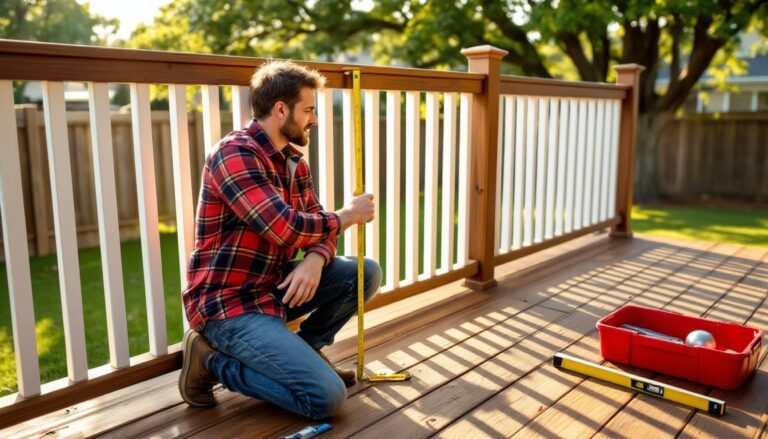
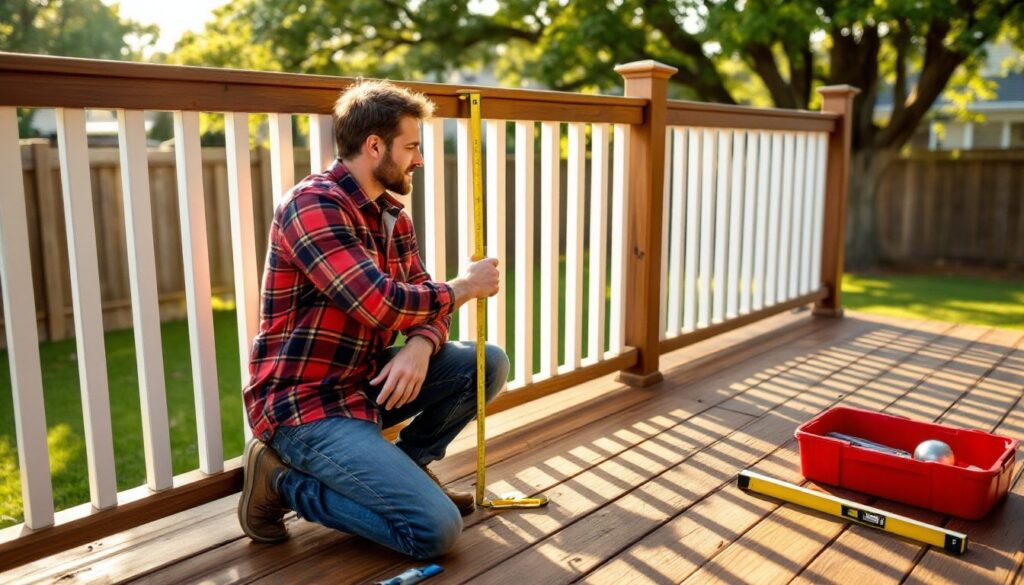
Measuring sounds simple, but plenty of DIYers get it wrong. For deck guardrails, measure vertically from the deck walking surface to the top of the railing. Don’t measure from the top of the decking board if there’s an uneven surface or if boards are warped. Use the actual walking plane.
For stairs, it’s trickier. Deck stair railing height is measured from the nose (front edge) of each tread to the top of the handrail, following the slope of the stairs. The handrail should run parallel to the stair slope, maintaining that 34- to 38-inch height consistently from top to bottom.
Here’s a common mistake: measuring from the bottom of the stair stringer or from the ground below the stairs. That will give an incorrect reading. Always measure from the tread nose.
Use a level and a tape measure. Mark the 36-inch point on a post, then use a level to ensure the top rail hits that mark across the entire run. If the deck surface isn’t level (and many aren’t), the railing height must be consistent relative to the deck surface, not to a fixed elevation. This might mean the railing appears to “step” if the deck has multiple levels.
Inspectors will check multiple points along the railing, so one correct measurement isn’t enough. Verify height every 4 to 6 feet, especially on longer runs where materials can sag or shift during installation.
Common Deck Railing Code Violations to Avoid
The number one violation: railings that are too short. A railing that measures 35 inches instead of 36 doesn’t pass. Inspectors don’t round up. If the code says 36 inches, it means 36 inches minimum.
Another frequent problem is improper baluster spacing. Many builders eyeball the spacing or use leftover materials that don’t fit evenly, resulting in gaps wider than 4 inches. Always test spacing with an actual 4-inch sphere (a softball works) before securing balusters permanently.
Guardrail and handrail requirements can be confusing for first-time builders. Horizontal deck railing code is particularly strict because horizontal rails, cables, slats, or boards, can create a “ladder effect” that kids might climb. Some jurisdictions ban horizontal railings altogether on decks above a certain height. Others allow them but require closer spacing or additional mid-rails. Check local amendments before committing to a horizontal cable or slat design.
Weak or undersized posts also fail inspection. Railing posts must be sturdy enough to resist the required loads. For wood railings, 4×4 posts are standard, spaced no more than 6 feet apart. Metal and composite systems have their own engineering specs, follow the manufacturer’s installation guide exactly.
Finally, missing or improperly installed handrails on stairs is a red flag. Stairs with four or more risers require at least one handrail. If the stairs are wider than 44 inches, they need handrails on both sides. The handrail must be continuous from the top of the stairs to the bottom, with no breaks or gaps.
Choosing the Right Railing Style While Meeting Code
Code compliance doesn’t mean sacrificing style. Dozens of railing systems meet the deck railing code while offering distinct looks, from traditional wood balusters to sleek cable rails and low-maintenance composites.
Wood railings are the classic choice. Pressure-treated lumber is affordable and accepts paint or stain. Cedar and redwood resist rot naturally and age to a silvery gray if left untreated. Wood requires regular maintenance, sealing every two to three years, but it’s easy to repair and customize.
Composite and PVC railings eliminate most maintenance. They won’t rot, splinter, or need painting. Brands like Trex, TimberTech, and Azek offer systems engineered to meet code, with pre-spaced balusters and matching post caps. Installation is straightforward: posts, rails, and balusters snap or screw together. Expect to pay 20 to 40 percent more than wood, but factor in long-term savings on maintenance.
Metal railings, aluminum and steel, offer a modern, industrial look. Aluminum is lightweight, rust-resistant, and available in powder-coated colors. Steel (especially wrought iron) is heavier and more traditional but requires rust protection. Both materials easily meet code for deck stair railing height and load requirements.
Cable railings have surged in popularity for their minimal visual obstruction. Stainless steel cables run horizontally between posts, providing safety without blocking views. But, cable spacing is critical. Cables must be spaced no more than 4 inches apart vertically, and the system must meet the same load requirements as traditional railings. For deck design inspiration and detailed build tutorials, many homeowners turn to trusted resources that break down railing installation step by step.
Glass panel railings are another option for unobstructed views. Tempered glass panels fit into aluminum or stainless steel frames. They’re pricey, often double the cost of wood or composite, but they’re virtually maintenance-free and make small decks feel more open. Glass panels must be thick enough to meet structural load requirements (typically ¼-inch tempered glass minimum).
No matter the material, all railings must meet the same code for deck railing height and structural standards. Some systems are pre-engineered and come with code compliance documentation, which simplifies the permitting process. When in doubt, choose a system that’s been tested and certified to meet IRC standards. Home improvement experts often recommend systems with clear installation instructions and manufacturer support, especially for DIYers tackling their first deck project.
Before buying materials, pull a permit if required. Most jurisdictions require permits for new decks and railing replacements on elevated decks. The permit process ensures an inspector verifies the work meets how high should a deck railing be standards and other safety codes. Skipping the permit might save time upfront, but it creates headaches during home sales or insurance claims.
One final tip: if the deck has stairs, make sure the stair railing visually matches the deck railing. Mismatched styles look sloppy and can confuse inspectors about which code applies where. Keep the design cohesive, and the project will look professional and pass inspection on the first try.