Table of Contents
ToggleA table saw is the backbone of any serious home workshop, and when it comes to reliability and power, DeWalt 10 inch table saws consistently top the list. Whether you’re ripping hardwood for cabinet builds, cutting dados for shelving, or breaking down plywood sheets for a deck project, a solid 10-inch saw can handle it all. DeWalt has built a reputation for jobsite-tough tools that transition seamlessly into garage and basement shops. This guide walks through why DeWalt’s 10-inch models stand out, compares the top performers in their lineup, and covers everything from critical features to safety protocols, so you can choose the right saw and use it confidently.
Key Takeaways
- A DeWalt 10 inch table saw is ideal for home workshops because it accepts a wide variety of affordable blades, parts are readily available, and the tool delivers the reliability needed for serious DIY projects.
- The DWE7491RS offers a 32½-inch rip capacity and premium features like a rolling stand and rack-and-pinion fence, making it the choice for users who prioritize maximum capacity, while the DW745 is a lightweight, budget-friendly alternative for portability and tight spaces.
- DeWalt table saws stand out with safety features like riving knives, anti-kickback pawls, and rack-and-pinion fence systems that prevent binding and kickback—major hazards that separate quality saws from cheaper alternatives.
- Always use a push stick, wear eye and hearing protection, keep the blade guard in place, and stand to the side of the blade’s path to minimize the risk of injury, as table saws are the most dangerous tools in a home workshop.
- A DeWalt 10 inch table saw excels at ripping hardwood and plywood, cutting dados for joinery, making miter and bevel cuts, breaking down sheet goods, and repetitive trim work where fence precision ensures consistent, professional results.
Why Choose a DeWalt 10 Inch Table Saw for Your Home Workshop
DeWalt’s 10-inch table saws hit the sweet spot for DIYers and weekend warriors. The 10-inch blade is the industry standard, it accepts the widest variety of affordable blades (rip, crosscut, dado stacks, fine-finish), and replacement parts are available everywhere from big-box stores to specialty woodworking suppliers.
The portable table saw category is where DeWalt really shines. Models like the DeWalt jobsite table saw series are built to survive rough handling on construction sites, which means they’ll laugh off the abuse in a home garage. Folding stands, onboard storage for accessories, and rack-and-pinion fence systems make these saws easy to move, set up, and stow when floor space is tight.
Power is another win. DeWalt equips their 10-inch models with 15-amp motors that deliver enough torque to rip through 2x lumber, hardwoods, and sheet goods without bogging down. That’s critical for clean cuts and reducing kickback risk. You’re not dealing with an underpowered benchtop saw that struggles mid-cut.
Finally, resale and support matter. DeWalt has a massive dealer network and solid warranty coverage (typically three years). If a part fails or you need a miter gauge upgrade, you won’t be hunting obscure retailers. For a home shop investment that might last a decade or more, that peace of mind counts.
Top DeWalt 10 Inch Table Saw Models Compared
DeWalt offers a handful of 10-inch table saws, but two models dominate the home-shop conversation: the DWE7491RS and the DW745. Both are portable, both run on 15-amp motors, but they serve slightly different needs.
DWE7491RS: The Portable Powerhouse
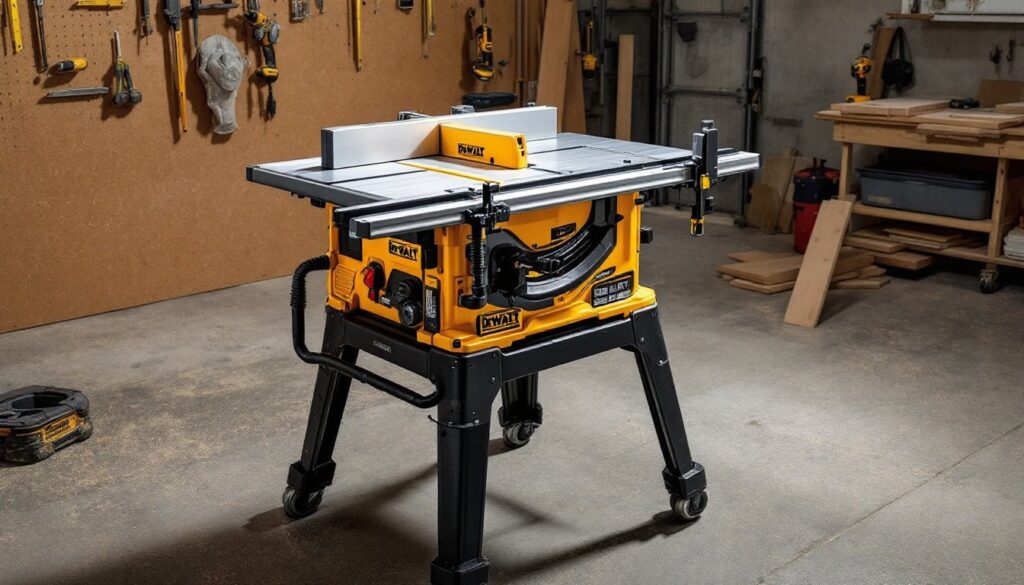
The DeWalt DWE7491RS table saw is the flagship in DeWalt’s portable lineup and a favorite for serious DIYers and pro framers alike. It boasts a 32½-inch rip capacity, letting you slice full sheets of 4×8 plywood or OSB in half without flipping the material, huge for efficiency and safety.
The rolling stand is the standout feature. It folds and rolls like a hand truck, so one person can move a 110-pound saw across a driveway or job site without throwing out their back. The rack-and-pinion fence locks square and stays there: you adjust it with a single crank, and it glides smoothly even after months of sawdust abuse.
Other highlights include onboard storage for the push stick, miter gauge, blade guard, and wrenches, plus a dust port that works reasonably well with a shop vac (expect about 70% capture if your vac has decent CFM). The DeWalt 7491RS table saw also has a Site-Pro Modular Guarding System with anti-kickback pawls and a riving knife, essential safety gear that some cheaper saws skip.
Expect to pay around $600–$700, depending on sales. It’s not cheap, but workshop tools in this class hold their value if you maintain them.
DW745: Compact and Budget-Friendly
The DW745 is DeWalt’s lightweight contender, weighing in at just 45 pounds. It’s designed for tight spaces and users who prioritize portability over maximum rip capacity. The fence only goes out to 20 inches, so you can’t rip a full sheet in one pass, but for trim work, small furniture projects, or job sites where you’re hauling the saw up stairs, the trade-off makes sense.
The fence on the DW745 uses a telescoping design that extends and locks with a lever, fast to adjust, though not quite as rigid as the DWE7491RS rack-and-pinion setup. Blade changes are tool-free thanks to spindle lock and onboard wrench storage. The saw runs the same 15-amp motor, so cutting performance is nearly identical: you’re just giving up rip width and stand features.
Pricing typically lands around $350–$450. If you’re building a first shop on a budget or need a second saw for a mobile setup, the DW745 delivers DeWalt quality without the weight or cost of the DWE7491RS.
Key Features That Make DeWalt Table Saws Stand Out
Several design choices separate DeWalt table saw models from the crowd, especially when you’re comparing them to imported benchtop clones or big stationary cabinet saws.
Rack-and-Pinion Fence Systems (on the DWE7491RS and higher models) use gears instead of sliding rails, so the fence stays parallel to the blade even when you’re cranking it back and forth. Cheaper saws rely on friction locks that drift out of square. You’ll spend less time tweaking and more time cutting.
Riving Knife and Anti-Kickback Pawls are standard across DeWalt’s lineup. The riving knife sits just behind the blade and moves with it during height and bevel adjustments, preventing the kerf from pinching the blade, one of the leading causes of kickback. The pawls grab the workpiece if it tries to shoot backward. Both features are recommended by safety experts and required on saws sold in the U.S. after 2009, but not all manufacturers carry out them as robustly as DeWalt.
Onboard Storage and Cord Wraps sound minor until you’ve lost a push stick or spent five minutes untangling an extension cord. DeWalt builds in hooks, clips, and compartments so accessories stay with the saw. Small quality-of-life wins that add up over hundreds of cuts.
Dust Collection Ports on DeWalt saws accept standard 2½-inch shop-vac hoses. Performance varies, table saws generate a lot of dust, and no portable saw captures it all, but hooking up a vac cuts airborne particulate significantly. Pair it with PPE (safety glasses and a dust mask at minimum) and you’ll keep your lungs and shop cleaner.
Expandable Tables and Outfeed Support options are available as aftermarket add-ons. DeWalt’s saws use standard bolt patterns, so you can attach wings, router tables, or outfeed rollers without custom fabrication. That modularity makes it easier to grow your setup as projects get more ambitious.
Essential Safety Tips for Operating Your DeWalt Table Saw
Table saws are the most dangerous tool in a home shop, not because they’re poorly designed, but because they remove material at high speed and demand full attention. Follow these rules every time you power up your DeWalt portable table saw.
Always wear eye and hearing protection. A 10-inch blade spinning at 4,800 RPM throws debris fast enough to embed splinters in your cornea. Safety glasses (not just regular glasses) and ear protection should go on before you flip the switch. If you’re cutting treated lumber, MDF, or anything that kicks up fine dust, add a respirator rated N95 or better.
Use a push stick or push block for any cut that brings your hand within six inches of the blade. DeWalt includes a basic push stick with most saws: keep it handy and use it. Kickback can yank your hand toward the blade faster than you can react.
Never remove the blade guard or riving knife unless you’re making a specific cut (like a dado) that requires it, and even then, reinstall them immediately after. The riving knife prevents binding: the guard keeps your fingers out of the cut zone. Woodworkers sometimes skip these because they obstruct visibility, but home improvement safety guides universally recommend keeping them in place.
Stand to the side of the blade’s path, not directly behind it. If a workpiece kicks back, you don’t want to be in the line of fire. Position yourself so your body is offset from the cut line, and keep bystanders clear of the area behind the saw.
Check the fence alignment before every session. A fence that’s even a few thousandths of an inch out of parallel can bind the workpiece and cause kickback. Use a combination square or dial indicator to verify the fence is square to the miter slots and parallel to the blade.
Unplug the saw before changing blades, adjusting the riving knife, or clearing jams. It takes five seconds and eliminates any chance of accidental startup. Blade changes on a table saw DeWalt model use a spindle lock and wrench, never try to force it or use an impact driver.
Secure loose clothing and jewelry. Tie back long hair, roll up sleeves, and remove rings or bracelets. Anything that can catch on a spinning blade will pull you in before you register what’s happening.
Common DIY Projects Perfect for a 10 Inch Table Saw
A DeWalt 10 inch table saw unlocks a wide range of home projects that would be tedious or imprecise with a circular saw or jigsaw. Here are some of the most common ways DIYers put these saws to work.
Ripping hardwood or plywood for furniture builds. Whether you’re making a bookshelf, workbench, or dining table, you’ll need to rip boards to width and crosscut them to length. The DeWalt jobsite table saw handles both tasks, and the 32½-inch rip capacity on the DWE7491RS lets you break down full sheets without wrestling them through multiple passes.
Cutting dados and rabbets for joinery. With a stacked dado blade set (sold separately), you can cut flat-bottomed grooves for shelf pins, drawer bottoms, or cabinet backs. Most DeWalt 10-inch saws accept an 8-inch dado stack: check your model’s arbor length and throat plate compatibility. You’ll need to remove the riving knife for dado work, so take extra care with feed speed and hand placement.
Miter cuts and bevels for trim carpentry. While a miter saw is the go-to for crown molding and baseboards, a table saw can handle angled cuts too. Set the miter gauge to 45° for picture frames or the blade bevel for angled edge cuts. The DWE7491RS offers a bevel range of 0–45°, locked with a large, easy-to-read scale.
Breaking down sheet goods for flooring or paneling underlayment. Cutting 4×8 sheets of plywood, MDF, or OSB is safer and faster on a table saw with outfeed support than trying to balance them on sawhorses with a circular saw. Use a straight edge or the fence, and have a helper support the offcut so it doesn’t bind or kick.
Custom shelving and built-ins. Many built-in projects require repetitive cuts to exact dimensions, shelf standards, nailers, face frames. The table saw’s fence lets you set a dimension once and rip a dozen identical pieces without re-measuring. Consistency is key for professional-looking results.
Deck and fence boards. If you’re building or repairing outdoor structures, a table saw makes quick work of ripping treated 2x4s, 2x6s, or composite decking to width. Just be sure to use a carbide-tipped blade rated for treated lumber: the chemicals in PT wood dull standard steel blades fast.
For any of these projects, remember that cutting is only half the process, surface prep, accurate layout, and proper assembly matter just as much. Measure twice, cut once, and always account for blade kerf (about ⅛ inch on most 10-inch blades) when calculating final dimensions.