Table of Contents
ToggleThe kitchen appliance market has shifted toward personalization, and bespoke refrigerators sit at the center of that trend. Unlike traditional white-box appliances, these units let homeowners match cabinet panels, swap door colors, and configure modules to fit their exact space. Whether you’re remodeling an outdated galley kitchen or building from scratch, understanding how bespoke refrigerators work, and what they’ll cost you, can make the difference between a showpiece and a regret. This guide covers materials, pricing, installation logistics, and whether custom cooling is the right call for your project.
Key Takeaways
- Bespoke refrigerators offer modular customization with interchangeable panels and configurable layouts at $3,000–$6,000, delivering premium design without the $8,000+ cost and cabinet complexity of true built-in models.
- Accurate measurements and careful planning of door swing clearance, electrical requirements, and water line placement are critical before delivery to avoid costly installation mistakes.
- These customizable appliances support future design changes through swappable panels, better resale value (40–60% recovery), and eco-friendly flexibility compared to standard refrigerators.
- Bespoke refrigerators solve three core kitchen challenges: visual aesthetic cohesion with cabinetry and hardware, spatial efficiency in nonstandard spaces, and integration of smart features like Wi-Fi connectivity and smartphone monitoring.
- Panel material choices—glass, matte steel, coated metal, and wood veneer—require physical samples under your kitchen’s lighting before purchase, with replacement panels costing $150–$400 each.
- Energy Star certified bespoke models reduce annual cooling costs by approximately $70 compared to older 15-year-old refrigerators, offsetting investment over time.
What Is a Bespoke Refrigerator?
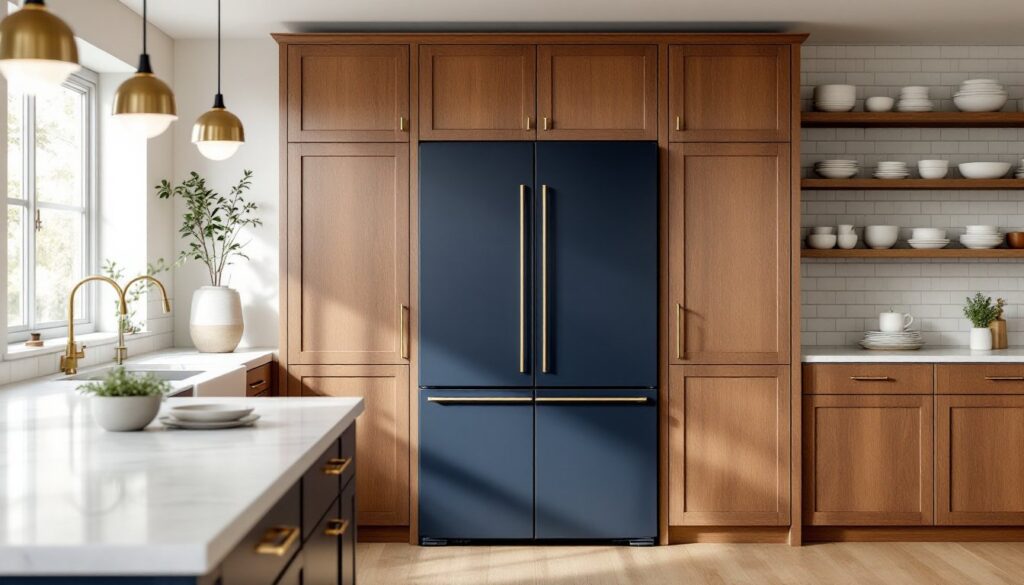
A bespoke refrigerator is a modular, customizable appliance designed to integrate with a homeowner’s specific aesthetic and functional needs. Unlike built-in models that hide behind cabinetry, bespoke units are freestanding but feature interchangeable door panels, configurable layouts, and finish options that align with kitchen design.
The term “bespoke” traditionally means made-to-order, but in the appliance world it usually refers to pre-engineered modules you can mix and match. The bespoke Samsung refrigerator lineup, for instance, lets you stack or combine different compartment sizes (freezer-on-bottom, French door, side-by-side) and then choose from dozens of panel colors and finishes. You’re not commissioning a one-off fabrication, you’re selecting from a curated menu of parts.
These units differ from panel-ready models, which require you to provide your own cabinet-matching panels. Bespoke fridges come with factory-finished panels in glass, matte steel, or coated metal that you can swap out without hiring a cabinet shop. If your design vision changes or you move, you can order replacement panels instead of a new appliance.
The modularity extends to interior configuration. Some manufacturers offer adjustable shelving, humidity-controlled crisper zones, and dual ice makers. These aren’t aftermarket hacks, they’re part of the product line and designed to snap together without custom framing.
Why Choose a Bespoke Refrigerator for Your Home
Bespoke refrigerators solve three main problems: aesthetic mismatch, inflexible layouts, and the high cost of true custom cabinetry integration.
First, design cohesion. If you’ve invested in warm walnut cabinets and brushed brass hardware, a stark stainless appliance can break the visual flow. Bespoke panels let you pull accent colors from backsplash tile, match metal finishes, or even coordinate with your range. This is especially valuable in open-plan homes where the kitchen is visible from living areas.
Second, spatial efficiency. Standard refrigerators come in fixed widths, 33, 36, or 42 inches nominal. Bespoke modules can be combined to fit awkward alcoves or to flank a central pantry column. If you’re working with a 1950s bungalow where the old fridge nook is 38 inches wide, mixing two smaller bespoke units can eliminate dead space and custom filler strips.
Third, cost versus built-in. True built-in refrigerators from Sub-Zero or Thermador often start around $8,000 and require precise cabinet framing. Bespoke units typically run $3,000 to $5,000 and install like standard appliances, no cabinet shop, no structural headers. You get the high-end look without the contractor invoice.
Another advantage is future-proofing. Homeowners who like to refresh decor every few years can order new panels instead of replacing the entire appliance. That’s less landfill waste and lower long-term cost. For anyone planning to sell within five to ten years, a customizable fridge can appeal to a broader buyer pool since the next owner can swap panels to their taste.
Key Features and Customization Options
Understanding what you can change, and what’s locked in, helps set realistic expectations.
Modular configurations let you stack or combine compartments. Common setups include a four-door French door over a bottom freezer, or two side-by-side columns (one fridge, one freezer). Some brands offer single-door beverage modules that sit alongside larger compartments. Before ordering, sketch your floor plan and measure the clearance for door swing, French doors need roughly 24 inches of swing space per door.
Smart features are standard on most 2026 models. Expect Wi-Fi connectivity, internal cameras viewable via smartphone, and voice-assistant integration. These aren’t gimmicks when you’re at the hardware store wondering if you have milk. Some units include adjustable temperature zones controlled by app, useful if you store wine alongside produce.
Many counter-depth refrigerators now offer customizable panels, blending the flush look of built-ins with the modularity of bespoke systems. This hybrid approach works well in kitchens where cabinets are 24 inches deep and you want the fridge to align with the face frame.
Energy ratings matter. Look for ENERGY STAR certification, which typically means 10–15% better efficiency than the federal minimum. A 25-cubic-foot bespoke fridge should draw around 600–700 kWh annually. Inverter compressors, standard on premium models, reduce cycling noise and improve longevity.
Panel Materials and Finishes
This is where bespoke refrigerators earn their name. Glass panels come in frosted, mirrored, or tinted varieties. They’re easy to clean but show fingerprints unless treated with an oleophobic coating. Matte steel offers a softer look than polished stainless and resists smudges better. Coated metal panels are available in colors like navy, sage, pink, or charcoal, usually with a powder-coat or baked enamel finish.
Some manufacturers offer wood-veneer overlays that mount onto metal substrates. These aren’t solid wood, they’re composite panels with real veneer faces. Expect oak, walnut, or maple options. The veneer is factory-sealed, but it’s still wood: avoid placing the unit next to a dishwasher vent or range where steam and heat can warp the surface.
Texture options range from smooth glass to brushed metal to linen-like finishes. In online configurators, colors often look different than they do under your kitchen’s LED lighting. Order physical samples before committing, most brands ship swatch kits for around $10.
Panel swaps are tool-free on most models. You remove magnetic or clip-on frames, slide out the old panel, and snap in the new one. Budget 15–30 minutes per door. Replacement panels run $150 to $400 each depending on material and size.
Cost Considerations: What to Budget for a Bespoke Refrigerator
Pricing varies by brand, capacity, and feature set, but expect to spend $3,000 to $6,000 for a mid-range bespoke refrigerator with standard panels. High-end configurations with glass panels, dual ice makers, and larger capacity can push toward $7,500.
Breakdown by component:
- Base refrigerator unit: $2,500–$4,500
- Premium panel sets (glass, wood veneer): +$500–$1,200
- Extended warranty: $200–$400 for three years
- Delivery and haul-away: $100–$200
If you’re comparing to built-in models, remember that built-ins often require custom cabinetry to frame the unit. Cabinet shops charge $500 to $1,500 for surrounding panels and trim, plus installation labor. Bespoke units skip that step entirely.
Ongoing costs include replacement water filters ($40–$60 every six months) and energy consumption. At $0.13 per kWh (the 2026 U.S. average), a 650 kWh/year model costs roughly $85 annually to run. If you’re replacing a 15-year-old fridge that draws 1,200 kWh/year, you’ll save about $70 per year.
Financing is common. Many appliance retailers offer 0% APR for 12–24 months on purchases over $2,000. Read the terms, deferred interest means if you don’t pay off the balance before the promotional period ends, you owe backdated interest from day one.
Resale value holds better than standard appliances. A well-maintained bespoke fridge in a desirable finish can return 40–60% of original cost after five years, versus 20–30% for a basic stainless model. If you’re planning to sell your home, neutral panels (white, black, stainless) appeal to more buyers than bold colors.
Installation and Design Planning Tips
Measure twice, order once. Nominal versus actual dimensions trip up many DIYers. A “36-inch” refrigerator is usually 35.75 inches wide, but add another inch for door handles and hinge clearance. If your opening is exactly 36 inches, the unit won’t fit.
Depth matters more than you think. Standard-depth fridges (30–34 inches) protrude past 24-inch base cabinets. Counter-depth models (24–27 inches) sit flush but sacrifice interior volume, expect 20–22 cubic feet instead of 25–28. Measure from the wall to the cabinet face, not to the countertop edge, since counters often overhang by an inch.
Electrical and water lines need to be in place before delivery. Refrigerators require a dedicated 15-amp circuit per NEC guidelines (though a 20-amp circuit is better if you’re running a large compressor). The outlet should be within six feet of the final position, extension cords aren’t code-compliant for permanent appliances.
For models with ice makers or water dispensers, run a ¼-inch copper or braided stainless supply line from a shutoff valve under the sink or through the floor. PEX tubing works but check local code, some jurisdictions restrict it for appliance connections. Install a shutoff valve you can reach without moving the fridge: saddle valves are no longer recommended because they’re prone to leaks.
Door swing clearance is non-negotiable. French doors need space to open 90 degrees or you can’t pull out crisper drawers. If your fridge sits perpendicular to an island, make sure the doors clear the island edge. Some homeowners discover this problem after delivery and have to reposition the island or return the appliance.
Ventilation is often ignored. Refrigerators exhaust heat from the back or bottom. Leave at least one inch of clearance behind the unit and two inches on the sides if it vents laterally. Blocking airflow forces the compressor to work harder, shortening its lifespan and voiding some warranties.
Coordinate with other trades if you’re mid-remodel. If the flooring contractor is laying tile or hardwood, decide whether the fridge sits on top of the finished floor or gets its own subfloor. Setting it on the finish floor makes future replacement easier but uses more material. A appliance dolly and a second person are essential, most bespoke fridges weigh 250–350 pounds.
Community forums like Houzz discussions on bespoke refrigerators offer real-world feedback on installation challenges, panel durability, and whether specific configurations work in tight spaces.
Conclusion
Bespoke refrigerators deliver design flexibility and modular functionality without the cost and complexity of true built-in units. By understanding panel options, measuring your space accurately, and planning electrical and water connections ahead of time, you can integrate a customizable appliance that evolves with your home. Whether you’re drawn to the swappable panels or the configurable layout, the key is treating it like any other major installation, measure carefully, plan for code compliance, and don’t skip the prep work.