Table of Contents
ToggleFitting a full-size refrigerator into a compact urban kitchen, studio, or in-law suite often means choosing between counter space and cold storage. That’s where an apartment size refrigerator comes in. These compact units typically measure 18-24 inches wide and deliver full-fridge functionality, fresh food compartment, freezer, adjustable shelving, without dominating the floor plan. Whether you’re furnishing a rental, downsizing to a condo, or adding a second fridge to a basement kitchenette, understanding what qualifies as “apartment size” and how to match capacity to lifestyle will save you from buyer’s remorse and wasted square footage.
Key Takeaways
- An apartment size refrigerator typically measures 18–24 inches wide with 7–12 cubic feet of capacity, offering full functionality in compact spaces without sacrificing a freezer compartment.
- Apartment refrigerators consume 100–150 kWh annually compared to 400–600 kWh for full-size units, delivering significant energy savings and lower upfront costs ($400–$900 versus $1,200–$3,000).
- Proper placement requires measuring clearances carefully—at least 1 inch on each side and 2 inches at the rear for ventilation—and leveling front-to-back to ensure efficient operation and door sealing.
- Prioritize frost-free operation, adjustable shelving, separate temperature controls, and reversible door options when selecting an apartment refrigerator to avoid common frustrations and maximize convenience.
- Top-freezer models offer affordability and ease of access, while bottom-freezer configurations provide eye-level fresh-food access and suit most cooking workflows despite a higher price premium.
What Is an Apartment Size Refrigerator?
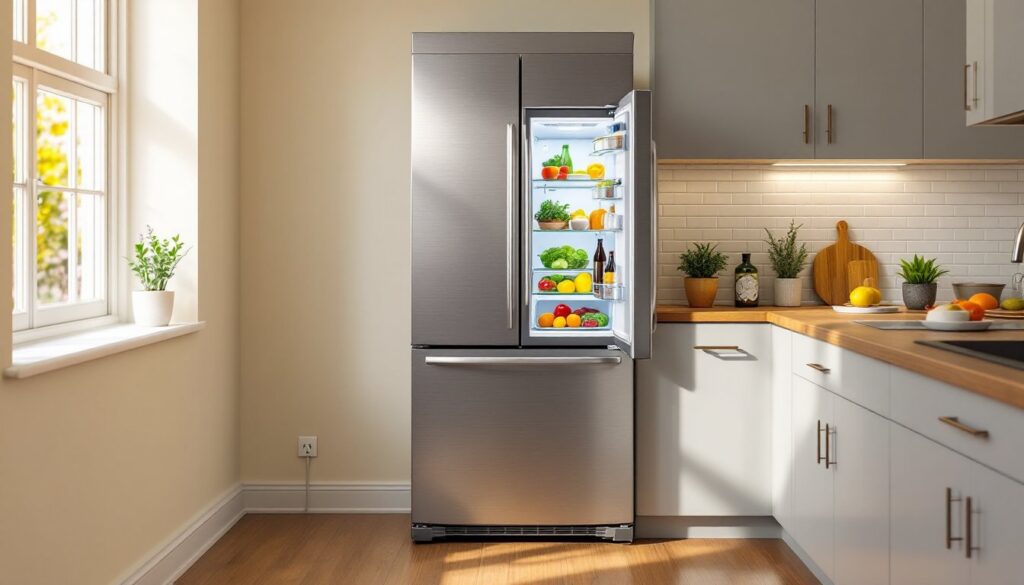
An apartment refrigerator is a narrower, shallower alternative to standard residential models, designed to fit tight spaces without sacrificing essential features. While a conventional fridge runs 30-36 inches wide, apartment models clock in at 18-24 inches wide and typically stand 60-66 inches tall. Most offer 7-12 cubic feet of total capacity, split between a fresh-food section and a top or bottom freezer.
Don’t confuse these with dorm or bar fridges, those are true mini units (under 5 cubic feet) and usually lack a proper freezer compartment. An apartment size refrigerator with freezer is a legitimate, dual-zone appliance. It’s built to the same electrical and safety codes (UL listing, NEC-compliant grounding) as full-size models, just scaled down in footprint.
Key differences include:
- Width: 18-24 inches (standard models are 30-36 inches)
- Capacity: 7-12 cu. ft. (standard models range 18-26 cu. ft.)
- Freezer configuration: Top-mount or bottom-mount compartments with separate doors
- Depth: Often 24-28 inches, which can sit flush with standard 24-inch base cabinets
This category also includes what retailers call a flat refrigerator, units with a streamlined profile and recessed handles that blend into cabinetry runs. They’re popular in galley kitchens where every protruding inch counts.
Key Benefits of Apartment Size Refrigerators
Space efficiency is the obvious win, but there’s more to the value proposition:
- Footprint flexibility: A small apartment refrigerator fits alcoves, under-counter openings, or narrow pantry niches that can’t accommodate a 36-inch box. Measure your clearance carefully, you’ll need at least 1 inch on each side and 2 inches at the rear for ventilation per manufacturer specs.
- Energy savings: Smaller refrigerators cycle less air and use less power. Most apartment models pull 100-150 kWh annually compared to 400-600 kWh for full-size units. Look for the ENERGY STAR label: certified models use roughly 10% less energy than the federal minimum.
- Lower upfront cost: Expect to pay $400-$900 for a quality apartment size refrigerator freezer, versus $1,200-$3,000 for standard models. Budget brands start around $350, but verify warranty coverage and replacement-part availability.
- Mobility: Most weigh 80-120 pounds, so moving one up a walk-up or relocating it during a kitchen remodel is manageable with a hand truck and a second person. Always disconnect power and defrost the freezer 24 hours before transport.
- Secondary-use appeal: Even if you upgrade to a full-size fridge later, an apartment model serves well as a garage beverage cooler, workshop supply fridge, or guest-suite amenity.
One note: compact doesn’t mean compromise on food safety. Models with separate thermostats for fridge and freezer compartments maintain FDA-recommended temps (37-40°F fresh, 0°F freezer) just as reliably as larger units.
How to Choose the Right Size for Your Space
Start with a tape measure, not a product page. Measure the width, depth, and height of your installation space, then subtract clearances:
- Sides: 1 inch minimum per side for air circulation (check your model’s installation manual, some specify more)
- Rear: 2 inches behind the condenser coils
- Top: 1 inch clearance unless the unit is designed for built-in use
- Door swing: Add 90 degrees of arc: a 24-inch door needs roughly 26 inches of adjacent clearance to open fully
If you’re replacing an older unit, don’t assume the cutout dimensions match modern standards. Measure the actual opening, not the old fridge.
Next, calculate capacity needs. A general rule: 4-6 cubic feet per person for primary refrigeration. A solo dweller or couple can get by comfortably with an 8-10 cu. ft. apartment size refrigerator: add 2 cu. ft. if you batch-cook or freeze leftovers regularly.
Consider door hinge orientation. Most apartment fridges offer reversible doors, but verify before purchase. A right-hand swing that opens into a wall is a daily annoyance you can’t fix without replacing the unit.
Finally, check electrical requirements. Nearly all apartment refrigerators run on standard 120V, 15A circuits. Verify your outlet is grounded (three-prong) and on a dedicated circuit or shared only with low-draw devices. Extension cords void most warranties and violate NEC Article 400.8.
Essential Features to Look For
Not all compact fridges are created equal. Prioritize these features based on your cooking habits and layout constraints:
Adjustable shelving: Wire or tempered-glass shelves that slide or flip up let you store tall bottles or sheet pans. Look for at least three adjustable positions in the fresh-food section.
Separate temperature controls: Dual thermostats (one for fridge, one for freezer) prevent the common issue where turning down the freezer also warms the fridge. This is standard on better small space appliances but often missing on budget models.
Frost-free operation: Auto-defrost systems use a timer and heating element to prevent ice buildup. Manual-defrost models cost less upfront but require quarterly defrosting, a messy, hours-long chore. For most users, frost-free is worth the extra $50-$100.
Interior lighting: LED bulbs last longer and stay cooler than incandescent. Some models include door-activated lights in both compartments: cheaper units light only the fridge.
Door storage: Gallon door bins and dedicated butter/cheese compartments maximize usable space. Measure your go-to milk or juice containers, some narrow fridges skimp on door depth.
Reversible door swing: Confirm this in the specs, not just the marketing copy. Installation typically requires removing a few screws and repositioning the hinge bracket.
Noise level: Compressor noise ranges from 38-45 dB. Anything above 42 dB is noticeable in a studio apartment. Check third-party reviews: manufacturers rarely publish accurate sound data.
Warranty coverage: A one-year parts and labor warranty is baseline. Extended coverage on the sealed refrigeration system (compressor, evaporator, condenser) should run 5-10 years. Register your unit within 30 days to activate coverage.
Top Styles and Configurations
Top-freezer models remain the most common and affordable apartment size refrigerator with freezer layout. The freezer sits above the fresh-food compartment, typically taking up 20-30% of total volume. Pros: lower cost, easier access to frozen items without bending. Cons: you’ll crouch for fresh produce and deli drawers daily.
Bottom-freezer configurations put the fridge at eye level, which suits most users’ workflow, fresh food gets accessed more often than frozen. Expect to pay $100-$200 more than a comparable top-freezer unit. The pullout freezer drawer slides on metal rails: cheaper models use plastic tracks that wear out within 3-5 years.
All-refrigerator models (no freezer) max out fresh-food space, often fitting 10-12 cu. ft. into a 24-inch width. These work well as secondary fridges or in households that use a separate chest freezer. Some include a small ice-cube tray compartment that holds 32-35°F, cold enough for short-term frozen storage but not true freezing.
Counter-depth apartment fridges align flush with standard 24-inch base cabinets, creating a built-in look without custom panels. They sacrifice 1-2 cu. ft. of capacity compared to standard-depth models but deliver a cleaner sightline in open-plan layouts.
Some brands now offer integrated panel-ready options for compact models, where you attach a cabinet door to match surrounding cabinetry. This adds $200-$400 to the base price and requires precise hinge alignment, not a beginner DIY install.
For extremely tight spaces, consider a flat refrigerator with recessed handles or touch-latch doors. These shave 1-2 inches off the overall depth, which can make or break a galley-kitchen installation. Testing by appliance reviewers shows that handle style has minimal impact on interior capacity but significant effect on walkway clearance.
Installation and Placement Tips
Before delivery, confirm your doorways and stairwells can accommodate the boxed unit. Add 4 inches to the fridge’s published dimensions for packaging. If you’re in a walk-up, measure the narrowest point, usually the landing turn.
Leveling is critical. Use a 24-inch bubble level on both the side-to-side and front-to-back planes. Most apartment refrigerators have adjustable front legs (turn clockwise to raise) and fixed rear rollers. Aim for a slight backward tilt (about 1/4 inch over 24 inches of depth) so the door swings closed on its own. An out-of-level fridge runs louder, wears the compressor unevenly, and can cause door-seal leaks.
Ventilation clearances: Don’t push the unit tight against the wall. Condenser coils (usually on the rear panel or underneath) need airflow to dissipate heat. Block them, and the compressor runs constantly, spiking your electric bill and shortening service life. If your space is extremely tight, look for models with bottom-mount condensers that pull air from the front toe kick.
Outlet placement: The power cord is typically 5-6 feet long and exits from the rear lower corner. If your outlet is more than 4 feet away or positioned awkwardly, hire an electrician to add a new receptacle, do not use an extension cord. Cost for a new 120V outlet runs $150-$300 depending on your area and whether the electrician needs to run new wire through finished walls.
Allow acclimation time: Let the unit sit unplugged for 4 hours after delivery if it was transported on its side or tilted beyond 45 degrees. This lets compressor oil drain back to the sump. Then plug in and wait another 4-6 hours before loading food: the interior must reach proper temp first.
Safety check: Verify the three-prong plug seats fully in the outlet and the unit is stable. Tug gently on the top front corners, any rocking means you need to re-level. Keep the area behind the fridge clear of cardboard, cleaning supplies, or anything flammable. The rear panel gets warm during operation.
For renters, photograph the installation area before and after. Some landlords specify that replacement appliances must match original dimensions: confirm lease terms before swapping out an existing unit.
Conclusion
Choosing the best apartment size refrigerator comes down to measuring twice, comparing features against your actual cooking habits, and verifying clearances before checkout. Prioritize frost-free operation, adjustable shelving, and separate temperature controls, these pay dividends in daily convenience and food preservation. Whether you’re outfitting a studio, adding capacity to a basement bar, or working around limited square footage, a well-chosen compact fridge delivers full functionality without the spatial bloat.