Table of Contents
ToggleShopping for laundry appliances isn’t glamorous, but it’s one of those decisions that affects your household every week for the next decade. Amana washer and dryer sets have earned a reputation for delivering solid performance without the premium price tag, but that doesn’t mean all models are created equal. Whether you’re replacing a dead machine at 9 p.m. or planning a laundry room renovation, understanding what Amana offers in 2026 can save you from buyer’s remorse and unnecessary service calls. This guide breaks down the models, features, and practical considerations that matter when you’re spending real money on appliances that need to last.
Key Takeaways
- Amana washer and dryer sets deliver reliable performance at 20-30% lower cost than premium brands while sharing similar internal engineering and components.
- Front-load models like the NFW5800HW offer higher efficiency and faster drying times with 1,200 RPM spin speeds, while top-load options like the NTW4516FW handle heavily soiled clothes better and complete cycles 10-15 minutes faster.
- Proper installation requires measuring rough-in dimensions carefully, investing in braided stainless steel supply hoses instead of rubber, and using rigid aluminum duct for dryer venting to prevent efficiency loss and fire hazards.
- Moisture sensors in Amana dryers reduce energy consumption by 15-20% compared to timed cycles, while stainless steel or porcelain-coated components extend appliance lifespan in humid climates and hard water areas.
- Monthly maintenance including dispenser cleaning, monthly washer cleaning cycles, and annual vent duct cleaning prevents common issues and extends the operational life of your Amana appliances.
Why Amana Washers and Dryers Stand Out for Homeowners
Amana appliances occupy a sweet spot in the laundry market: reliable enough for daily use, affordable enough that you won’t wince at the invoice, and backed by Whirlpool Corporation’s manufacturing expertise. The brand targets homeowners who prioritize function over frills, people who need clean clothes, not Wi-Fi connectivity for their spin cycle.
The value proposition is straightforward. Amana washer dryer sets typically cost 20-30% less than comparable models from premium brands, yet they share many of the same internal components and engineering. You’re not paying for touchscreen controls or app integration, but you’re getting proven wash systems, durable drum construction, and parts availability that matters when something breaks at year six.
One practical advantage: Amana models use standardized dimensions and connections. If you’re replacing an existing washer and dryer in a tight laundry closet or basement alcove, chances are an Amana set will fit without modifying plumbing, electrical, or ventilation. That’s a real cost-saver compared to European-style compact units that require adapter kits and potentially new utility runs.
Warranty coverage is competitive, typically one year parts and labor, with extended coverage on drive motors and wash baskets. It’s not industry-leading, but it’s adequate for appliances in this price bracket. Keep your purchase receipt and register the products: warranty claims get processed faster when you’ve got documentation ready.
Top Amana Washer and Dryer Models to Consider in 2026
Best Front-Load Options
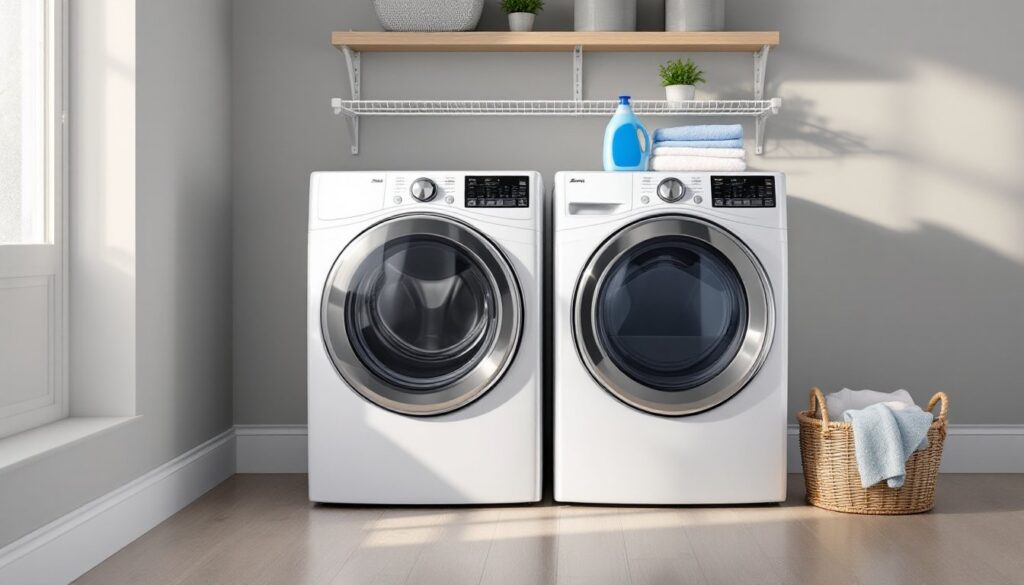
The Amana NFW5800HW front-loading washer pairs well with the NED5800HW electric dryer for a matched set that fits standard 27-inch spaces. The washer offers a 4.3 cubic foot capacity, sufficient for king-size comforters without overloading, and uses a stainless steel wash basket that resists chipping and snagging. Spin speeds reach 1,200 RPM, which extracts more water and cuts drying time.
For the dryer side, the NED5800HW provides 6.5 cubic feet of drum space and includes an automatic moisture sensor to prevent over-drying (which saves energy and extends fabric life). Independent testing by laundry equipment reviewers has noted Amana’s dryer performance holds up well against pricier competitors in actual household use.
Front-load Amana models require high-efficiency (HE) detergent, using regular detergent creates excess suds that confuse the sensors and leave residue. Budget about $0.15-0.20 per load for HE detergent if you’re switching from a top-loader.
One installation note: front-loaders vibrate more during the spin cycle than top-loaders. If you’re placing the set on a second floor or over a basement, use anti-vibration pads (about $20 for a four-pack) under each appliance leg to dampen noise transmission through floor joists.
Top-Load Washer and Dryer Picks
The Amana NTW4516FW top-load washer remains a workhorse for households that prefer traditional agitator-style cleaning. With a 3.5 cubic foot capacity and a dual-action agitator, it handles heavily soiled work clothes and sports uniforms better than many impeller designs. Water fill is straightforward: hot, warm, or cold, selected via rotary dials, no computer boards to fail.
Pair it with the NED4655EW electric dryer (6.5 cubic feet), which uses timed dry cycles rather than sensor-based automation. Some users actually prefer this for controlling exact dry times on specific fabrics like heavyweight denim or delicate synthetics.
Top-load sets use more water per cycle than front-loaders (typically 15-20 gallons vs. 10-12 gallons), but they complete wash cycles 10-15 minutes faster on average. If you’ve got well water or pay a flat municipal rate, the water cost difference is negligible. For metered city water, calculate the annual difference, usually under $40 for a typical household.
These models fit into tighter laundry spaces vertically: you don’t need clearance to swing a door open like you do with front-loaders. Just ensure you’ve got at least 16 inches between the washer lid and any overhead shelving or ductwork for lid clearance.
Key Features That Make Amana a Smart Choice
Capacity matching is something Amana gets right. Their washer dryer set configurations pair appropriately sized machines, if you buy a 4.3 cubic foot washer, the recommended dryer has sufficient capacity to handle a full wet load without cramming. Mismatched capacities force you to split dryer loads or underload the washer, wasting time and energy.
Porcelain-coated or stainless steel components in Amana washers resist rust better than painted steel drums found in budget competitors. In humid climates or homes with hard water, this extends appliance life by several years. Check the spec sheet, stainless is worth the upcharge if available.
The Load & Go™ dispenser (available on select models) holds enough HE detergent for multiple loads. You fill it once, and the washer automatically dispenses the right amount each cycle. It’s genuinely useful for busy households, though it adds a component that can eventually fail. Weigh convenience against long-term serviceability.
For dryers, moisture sensors (standard on most Amana front-load dryers, optional on top-load models) prevent the common mistake of over-drying, which shrinks clothes and wastes electricity. The sensor tracks exhaust humidity and stops the cycle when clothes reach the selected dryness level. In practical terms, this can cut dryer energy use by 15-20% compared to timed cycles.
Amana doesn’t chase smart home integration like premium brands do. There’s no smartphone app to start a wash cycle from your office or receive push notifications when the dryer finishes. For some homeowners, that’s a feature, fewer connected devices, fewer software updates, and one less thing to troubleshoot when home tech systems inevitably get complex.
Installation Tips for Your Amana Washer and Dryer Set
Before delivery day, verify your rough-in dimensions. Measure the width, depth, and height of your laundry space, then subtract 2 inches from width and depth for hose clearance and airflow. Amana washers need about 4 inches behind the unit for supply hoses and drain connections: dryers need similar clearance plus vent duct routing.
Electrical requirements differ by dryer type. Electric dryers require a dedicated 30-amp, 240-volt circuit with a three-prong or four-prong outlet (four-prong has been code since 1996 for new construction, per NEC Article 250.140). Gas dryers need a 120-volt outlet for the motor and controls, plus a gas supply line, typically ½-inch black iron pipe or CSST (corrugated stainless steel tubing). Installing a gas line requires a licensed plumber or HVAC tech in most jurisdictions: this isn’t a DIY project unless you’re qualified.
Washers connect to hot and cold water supplies via standard ¾-inch hose threads. Replace the cheap rubber supply hoses that come in the box with braided stainless steel hoses (about $15 each). The rubber ones fail without warning and flood your laundry room, insurance claims for washing machine hose failures are surprisingly common.
For dryer venting, use rigid or semi-rigid aluminum duct, not flexible plastic or foil. Plastic duct violates most building codes and creates a fire hazard from lint accumulation. Keep the vent run as short and straight as possible, every 90-degree elbow adds about 5 feet of equivalent length, which reduces airflow and drying efficiency. If your vent run exceeds 25 feet or includes multiple turns, consider a booster fan (about $150 installed) to maintain proper exhaust velocity.
Level both appliances using a bubble level and adjusting the front leveling legs. An out-of-level washer will “walk” during the spin cycle and eventually damage the suspension or loosen water connections. Most installers get within 1 degree: that’s close enough.
Maintenance and Troubleshooting Your Amana Appliances
Monthly washer maintenance starts with cleaning the dispenser drawer. Pull it out completely (there’s usually a release tab), rinse detergent and fabric softener residue, and check for mold in the crevices. Front-loaders also need the door gasket wiped down after every few loads, trapped moisture breeds mildew that smells and stains clothes.
Run a washer cleaning cycle (or a hot water cycle with 2 cups of white vinegar) monthly if you use HE detergent, more often if you use regular detergent even though the warnings. This dissolves soap scum and mineral deposits in the pump and hoses.
Dryer lint traps should be cleared after every load. Once a month, vacuum behind the lint screen housing, lint bypasses the screen and accumulates in the cavity, restricting airflow. Annually, disconnect the dryer and clean the entire vent duct from appliance to exterior cap. A dryer vent cleaning kit (about $25, includes flexible rods and a brush) makes this manageable for most homeowners. If your vent terminates on the roof, hire a service, it’s not worth the ladder risk.
Common troubleshooting for Amana washers: if the machine won’t drain, check the drain hose for kinks and the pump filter for trapped socks or coins (filter location varies by model, consult the manual). If clothes come out soaking wet, the spin cycle may be detecting an unbalanced load: redistribute items and restart.
For dryers, if clothes take multiple cycles to dry, check the vent first, 90% of drying problems trace to restricted airflow. If the drum isn’t turning, the belt likely broke: replacement is a $20 part and a 30-minute job if you’re handy with a socket wrench and comfortable pulling panels.
Don’t ignore error codes. Amana uses simple fault codes displayed as blinking lights or alphanumeric readouts. The manual includes a troubleshooting chart: many issues (like a clogged drain or unbalanced load) are homeowner-fixable. For anything involving motors, control boards, or sealed systems, call a qualified appliance tech. Parts are available, and independent repair shops often charge less than factory service for out-of-warranty work.