Table of Contents
ToggleThe shift toward plastic-free cleaning products has gained serious momentum, and dishwasher detergent is no exception. Blueland dishwasher tablets represent a growing category of eco-conscious alternatives that promise to cut waste without sacrificing cleaning performance. If you’re tired of bulky plastic jugs cluttering your cabinet or questioning what’s actually in those conventional pods, these tablets might be worth a closer look. They’re compact, they’re refillable, and they claim to handle everything from baked-on casserole dishes to cloudy glassware. But do they actually deliver on performance, and are they a practical swap for the average household? Let’s break down how they work, what sets them apart, and whether they’re the right fit for your kitchen.
Key Takeaways
- Blueland dishwasher tablets eliminate single-use plastic by using plant-based wrappers and refillable tins, with one tin replacing roughly 60 plastic bottles over its lifetime.
- These tablets use enzyme-based formulas with protease and amylase to effectively tackle everyday messes like coffee stains and pasta sauce, though they perform best with pre-scraped dishes rather than heavily baked-on food.
- Blueland tablets cost $0.30–$0.35 per load, comparable to mid-range eco-friendly brands, with subscription discounts available that bring per-load costs down by 15%.
- Water temperature above 120°F and proper placement in the detergent compartment are critical for optimal performance, and a rinse aid may be needed in hard water areas to prevent spotting on glassware.
- For sustainability-focused households that scrape plates and run full loads, Blueland dishwasher tablets deliver a practical low-waste alternative that fits seamlessly into existing routines without special modifications.
What Are Blueland Dishwasher Tablets?
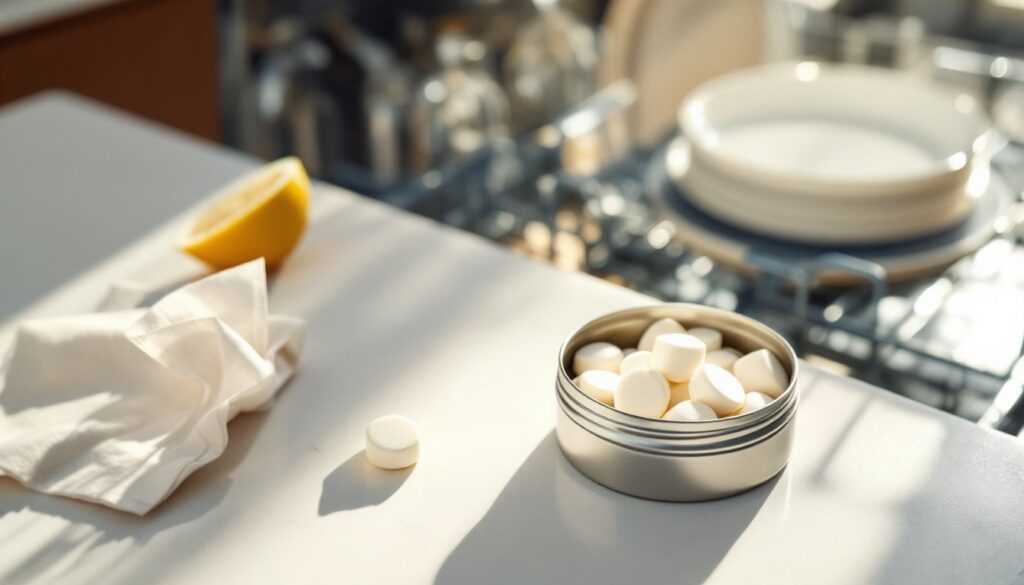
Blueland dishwasher tablets are pre-measured, individually wrapped pods designed to replace traditional liquid or powder dishwasher detergents. Each tablet is formulated without single-use plastic packaging, they come in a recyclable tin or cardboard sleeve, and the wrappers dissolve during the wash cycle.
Unlike conventional detergent pods that often contain excess water weight and layers of plastic, Blueland tablets are dry-pressed and packaged in plant-based film. You purchase a reusable tin once, then order tablet refills that ship in compostable packaging. The system is built around waste reduction: no more tossing a heavy plastic jug every month.
The tablets themselves are vegan, cruelty-free, and free from phosphates, parabens, and ammonia. They’re EPA Safer Choice certified, which means they meet strict environmental and health standards. For homeowners looking to reduce plastic waste without overhauling their entire routine, Blueland offers a straightforward swap that fits into existing dishwasher setups, no modifications or special cycles required.
How Blueland Dishwasher Tablets Work
Blueland tablets rely on powdered enzymes and oxygen-based bleach to break down grease, starches, and proteins. When you drop a tablet into the dishwasher’s detergent compartment, the plant-based wrapper dissolves on contact with water, releasing the active cleaning agents during the wash cycle.
The formula includes enzymes like protease (targets protein-based stains like egg or cheese) and amylase (breaks down starches from pasta or potatoes). Sodium carbonate acts as a water softener and degreaser, while sodium percarbonate provides oxygen bleach to tackle stains and brighten dishes. There’s no chlorine bleach, so it’s safe for most dishware, including wood-handled utensils and non-stick cookware.
The tablets are designed to work in both standard and high-efficiency (HE) dishwashers. They perform best in water temperatures above 120°F, so if your water heater is set lower, you might see reduced effectiveness on heavy soil. Hard water can also impact performance, if you notice cloudy glassware or mineral deposits, you may need to add a rinse aid or adjust your water softener settings. Blueland’s formula doesn’t include built-in rinse aid, so if you’re in a high-mineral area, pairing the tablets with a separate rinse agent is worth considering.
Key Benefits of Using Blueland Dishwasher Tablets
The biggest draw is waste reduction. One Blueland tin replaces roughly 60 plastic detergent bottles over its lifetime, assuming regular refills. For households committed to cutting down on single-use plastic, that’s a tangible impact. The refill pouches are compostable in municipal facilities, and the metal tin is infinitely recyclable or reusable for storage once you’re done with it.
Another benefit is space efficiency. The tablets are small, about the size of a half-dollar coin, and a 60-count tin takes up about as much room as a deck of cards. If you’re working with limited under-sink storage or a small pantry, this is a practical upgrade over bulky jugs.
Blueland’s ingredient transparency is also a selling point. The brand lists every component on its website, with explanations for what each one does. There’s no vague “fragrance” or “surfactant blend.” If you or someone in your household has sensitivities to certain chemicals, this level of detail makes it easier to vet the product before buying.
The tablets are also pre-measured, which eliminates guesswork and prevents overuse. With liquid detergents, it’s easy to pour too much, which can leave residue or cause excess suds. A single tablet per load keeps things consistent.
Performance and Cleaning Power
In independent tests by cleaning product reviewers, Blueland tablets scored well on everyday messes, coffee stains, oatmeal bowls, pasta sauce, and wine glasses. They handled light to moderate soil without issue, leaving dishes clean and streak-free in most cases.
But, heavily soiled pots and pans (think burnt-on cheese or caramelized sugar) may require a pre-rinse or scrub. The enzyme-based formula works best when food residue isn’t dried or caked on. If you routinely run full loads with tough, baked-on grime, you might need to pair the tablets with a soak or a quick scrub before loading.
Glassware clarity can vary depending on water hardness. In soft or moderately hard water, glasses come out clear. In very hard water, you may see spotting or film unless you use a rinse aid. This isn’t unique to Blueland, most eco-friendly tablets skip harsh chemicals that force a shine, so a rinse aid is often needed for that polished finish.
Overall, for households that scrape plates and don’t let dishes sit for days, the tablets perform on par with mainstream eco-friendly brands. They won’t outmuscle industrial-strength gel detergents, but that’s not their purpose. They’re designed for everyday cleaning with minimal environmental trade-offs.
Are Blueland Dishwasher Tablets Worth the Investment?
Cost is a common question. Blueland tablets run about $0.30 to $0.35 per load, depending on whether you buy a starter kit or a refill pack. That’s comparable to mid-range pods from brands like Seventh Generation or Method, and slightly higher than bulk-buy conventional detergents like Cascade or Finish.
The upfront cost for a starter kit (tin + 60 tablets) is around $24, while refills are typically $18 for 60 tablets. If you’re switching from a $12 jug that lasts 75 loads, you’ll pay more per load with Blueland. But if you’re already buying eco-friendly detergents, the pricing is competitive.
The real value depends on your priorities. If reducing plastic waste is a primary goal, especially if you’re already mindful of household organization and minimizing clutter, the refill model justifies the cost. You’re not just paying for detergent: you’re paying for a closed-loop system that eliminates recurring plastic waste.
For budget-focused DIYers, it’s worth noting that Blueland offers a subscription model with a 15% discount, which brings the per-load cost down slightly. You can pause or cancel anytime, so it’s not a hard commitment.
One trade-off: Blueland tablets don’t include a rinse aid, and they don’t contain the same heavy-duty surfactants found in conventional pods. If you have very hard water or frequently wash heavily soiled cookware, you may need to supplement with a rinse aid or pre-treatment. That adds a small cost and an extra step, which could offset the convenience.
Bottom line: if you value sustainability and ingredient transparency, and your dishwashing habits align with the product’s strengths, they’re a solid investment. If you’re looking purely for the lowest per-load cost or maximum cleaning power on burnt-on food, there are cheaper and stronger options.
How to Use Blueland Dishwasher Tablets for Best Results
Using Blueland tablets is straightforward, but a few adjustments can improve performance.
-
Scrape, don’t rinse. Remove large food particles, but skip the full pre-rinse. The enzymes need some residue to work on, and over-rinsing can actually reduce cleaning effectiveness.
-
Place the tablet in the detergent compartment. Don’t toss it in the bottom of the dishwasher. The compartment releases detergent at the right stage of the wash cycle.
-
Check your water heater. Aim for 120°F to 140°F. If your water is too cool, enzymes won’t activate properly. You can test this by running hot water at the sink before starting the dishwasher.
-
Add a rinse aid if needed. If you notice spots or film on glassware, fill the rinse aid reservoir. This is especially important in hard water areas. Home maintenance guides often recommend this for any powdered or tablet detergent.
-
Store tablets in a dry place. Humidity can cause the plant-based wrapper to break down prematurely. Keep the tin sealed and away from the sink or dishwasher steam.
-
Run full loads. Like any dishwasher detergent, Blueland tablets are most efficient when the machine is fully loaded. Running half-empty loads wastes water and detergent.
-
Use the appropriate cycle. For everyday dishes, a normal or eco cycle works fine. For heavily soiled items, select a heavy-duty or pots-and-pans cycle, which uses higher water temperatures and longer wash times.
If you’re switching from a gel or liquid detergent, you might notice a slight adjustment period. Powdered formulas can behave differently, especially in hard water. Give it a few cycles to see how your dishwasher responds, and tweak rinse aid or water temperature settings as needed.
Conclusion
Blueland dishwasher tablets offer a practical, low-waste alternative for homeowners who want to reduce plastic consumption without sacrificing dish cleanliness. They’re effective on everyday messes, transparent about ingredients, and built around a refill system that actually delivers on sustainability claims. They won’t replace industrial-strength detergents for heavily soiled cookware, and they work best when paired with proper water temperature and, in some cases, a rinse aid. For households that scrape plates, run regular loads, and value eco-friendly products, they’re a worthwhile swap that fits seamlessly into an existing routine.