Table of Contents
ToggleNot all kitchens come with the luxury of exterior wall access for venting. Whether you’re retrofitting an island cooktop, renting an apartment, or avoiding the cost and complexity of running ductwork through your ceiling, a ductless range hood, also called a ventless or recirculating hood, offers a practical alternative to traditional ducted ventilation. Instead of pushing smoke and grease outdoors, these units filter air internally and recirculate it back into the kitchen. They’re easier to install, require no structural modifications, and work in spaces where venting simply isn’t an option. This guide walks through how they function, when they make sense, and what to look for when choosing one for your home.
Key Takeaways
- A ductless range hood offers a practical ventilation solution for kitchens without exterior wall access, using multi-stage filtration to clean and recirculate air back into the space.
- Ductless models are significantly cheaper and faster to install than ducted systems, requiring only basic carpentry skills and a standard 120V outlet without structural modifications.
- Choose a ductless range hood if your cooktop is on an island or interior wall, you rent, or prefer light-to-moderate cooking; opt for ducted models if you cook frequently at high heat or have direct exterior venting access.
- Proper maintenance—cleaning grease filters every 2–4 weeks and replacing charcoal filters every 3–6 months—keeps a ductless range hood operating efficiently and extends its lifespan to 5–8 years.
- Mount your ductless hood 24–30 inches above an electric cooktop or 30–36 inches above gas burners, and ensure the hood width is at least 3–6 inches wider than your cooking surface for optimal capture.
- A ductless range hood won’t remove heat and humidity as effectively as ducted systems, making it better suited for light sautéing, baking, or simmering rather than high-heat searing or steam-heavy cooking.
What Is a Ductless Range Hood and How Does It Work?
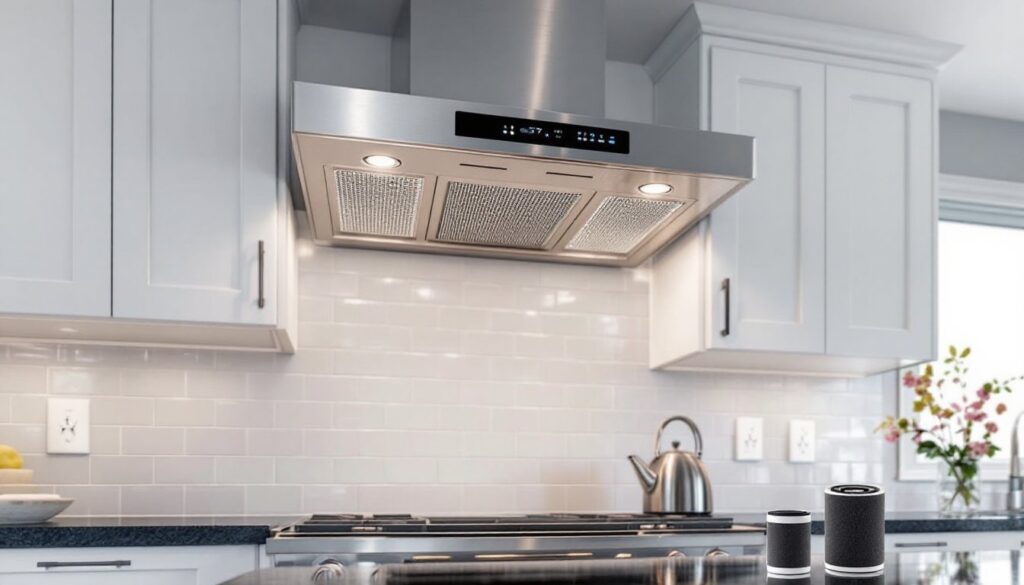
A ductless range hood (also referred to as a non-ducted range hood or ductless hood range) is a kitchen ventilation appliance that doesn’t vent air outside. Unlike conventional ducted hoods that rely on metal ductwork to exhaust cooking fumes, grease, smoke, and odors through an exterior wall or roof cap, ductless models pull air through a multi-stage filtration system and release cleaned air back into the room.
Most units use a two-filter setup. The first layer is a mesh or baffle grease filter that traps oil droplets and larger particulates. These metal filters are usually dishwasher-safe and reusable. The second stage is a charcoal or activated carbon filter that absorbs odors and volatile organic compounds (VOCs). Carbon filters are not washable and typically need replacement every 3–6 months depending on cooking frequency.
The hood’s fan draws air upward through these filters. The blower motor (measured in CFM, or cubic feet per minute) determines how much air the unit can process. After filtration, the air is pushed out through vents on the front or top of the hood and recirculates into the kitchen. Because there’s no duct run, installation is simpler, most models mount directly to the wall or underside of a cabinet using a few screws and a standard 120V outlet.
Benefits of Installing a Ductless Range Hood
Easier and cheaper installation. Without the need to cut through walls, joists, or roofing, a ventless range hood can go up in a couple of hours. You won’t need a reciprocating saw, roof flashing, or exterior vent cap. For renters or condo owners who can’t modify building exteriors, this is often the only legal option.
Works anywhere in the kitchen. Island cooktops and stoves on interior walls don’t have easy access to exterior venting. Running ductwork across a ceiling or down through cabinetry is expensive and eats into overhead clearance. A ductless unit solves that problem without structural changes.
Lower upfront cost. You’re not paying for ductwork, elbows, transition fittings, wall caps, or the labor to install them. Even high-quality ductless hoods tend to run $100–$400 less than comparable ducted models when you factor in installation materials.
No energy loss. Ducted hoods push conditioned air, heated in winter, cooled in summer, straight outside. Over time, that adds up. Recirculating models keep that air in the house, which can reduce heating and cooling costs, especially in climates with extreme temperatures.
That said, a ventless range hood won’t remove heat or humidity the way a ducted system does. If you do a lot of high-heat cooking or steam-heavy dishes like pasta or stir-fries, you’ll notice the kitchen stays warmer and more humid. It’s a trade-off, not a flaw, just something to plan for.
Ductless vs. Ducted Range Hoods: Which Is Right for Your Kitchen?
Choosing between ductless and ducted comes down to your kitchen layout, cooking style, and what modifications you’re willing (or able) to make.
Go ducted if:
- You have direct access to an exterior wall or can route ductwork through the attic or ceiling without major structural work.
- You cook frequently at high heat, searing, wok cooking, or deep frying, and need to remove smoke, steam, and heat from the space.
- You want maximum ventilation performance. Ducted hoods with 400+ CFM ratings move air more efficiently because they’re not relying solely on filtration.
- You’re doing a gut renovation and can plan ductwork into the build.
Go ductless if:
- Your range is on an island, peninsula, or interior wall with no practical path to outside air.
- You’re renting, or building codes or HOA rules prohibit exterior modifications.
- You do light to moderate cooking, mostly sautéing, baking, or stovetop simmering, and odor control is your main concern.
- You want a fast, low-cost install without hiring an HVAC contractor or cutting into drywall.
According to home improvement experts, ducted systems remain the gold standard for serious home cooks, but ductless models have improved significantly in recent years. Filter technology is better, and many units now offer multi-speed blowers and LED task lighting that rival ducted performance in everyday use.
One hybrid option: convertible range hoods can run in either ducted or recirculating mode. If you’re not sure about future kitchen remodels, a convertible unit gives you flexibility. Just note that running in ductless mode still requires carbon filters, which aren’t always included in the box.
How to Choose the Best Ductless Range Hood for Your Home
Start by measuring your cooktop. Range hoods should be at least as wide as the cooking surface, ideally 3–6 inches wider on each side for better capture. A 30-inch range works best with a 36-inch hood. Don’t go narrower than the cooktop or you’ll lose effectiveness.
Check mounting height. Most manufacturers recommend installing the hood 24–30 inches above an electric cooktop and 30–36 inches above gas burners. Too low and you risk a fire hazard or head clearance issues: too high and the fan won’t capture rising smoke effectively.
Consider noise level, measured in sones. Anything under 3 sones is relatively quiet: above 6 sones can be disruptive during conversation. Many ductless hoods list sone ratings by fan speed, so compare at the same CFM setting.
Look for dishwasher-safe grease filters. Aluminum mesh and stainless baffle filters hold up better than cheaper wire mesh and are easier to maintain. Some models include grease filter indicators or reminder lights.
CFM Rating and Filter Types
CFM (cubic feet per minute) tells you how much air the hood can move. For ductless models, this matters less than with ducted systems because the air isn’t exhausted, it’s filtered and returned. Still, higher CFM means faster filtration cycles.
A general rule: multiply your cooktop BTU output by 0.01 to estimate minimum CFM. A 30,000 BTU gas range needs around 300 CFM. For electric or induction cooktops, 200–300 CFM is usually sufficient for typical home cooking.
Pay attention to filter types and replacement costs. Charcoal filters vary in size, thickness, and longevity. Thicker carbon beds last longer and filter more effectively. Replacement packs typically cost $15–$40 for a set of two and should be swapped every 3–6 months depending on use. Some units use proprietary filters that can be harder to source, check availability before buying.
A few high-end ductless hoods now offer washable carbon filters that can be cleaned and reactivated in the oven, extending their lifespan up to a year. These cost more upfront but save money over time if you cook daily.
Installation Guide: Installing a Ductless Range Hood Yourself
Most ductless range hoods are DIY-friendly if you’re comfortable with basic carpentry and electrical work. You’ll need a drill/driver, stud finder, level, tape measure, screwdriver, and possibly a keyhole saw if you’re mounting to drywall without cabinet support. Always wear safety glasses when drilling overhead.
Step 1: Turn off power at the breaker if you’re hardwiring the unit. Most ductless models use a standard 120V plug, but some higher-end or commercial-style hoods require a dedicated circuit and hardwired connection per NEC guidelines.
Step 2: Locate studs or joists behind the mounting area. Wall-mount hoods need to anchor into at least one stud: under-cabinet models can often use the cabinet底板 as a mounting surface. Mark the centerline of your cooktop and transfer that to the wall or cabinet.
Step 3: Hold the hood or mounting bracket in place and check it with a level. Mark screw holes. If you’re between studs, use toggle bolts or heavy-duty drywall anchors rated for at least 50 lbs. Range hoods weigh 20–40 lbs, and vibration from the fan can loosen weak anchors over time.
Step 4: Drill pilot holes and fasten the mounting bracket or back plate with the provided screws. Hang the hood body on the bracket, most designs use keyhole slots or a hook-and-lift system. A second pair of hands helps here, especially with larger island hoods.
Step 5: Install the grease filters and carbon filters per the manual. Filters usually slide or clip into place. Plug in the unit (or complete hardwiring and replace the junction box cover). Restore power and test all fan speeds and lights.
If your model includes a remote blower option (less common in ductless setups), follow the manufacturer’s wiring diagram carefully. Remote blowers reduce noise but add complexity.
Important: even though you’re not venting outside, check local building codes. Some jurisdictions require range hoods over gas cooktops regardless of type, and a few still mandate ducted venting for gas appliances above a certain BTU threshold. When in doubt, call your local building department before starting work.
Maintenance Tips to Keep Your Ductless Range Hood Running Efficiently
Clean grease filters every 2–4 weeks. For light cooking, once a month is fine: if you sear meat or stir-fry often, do it every two weeks. Remove filters and run them through the dishwasher on a hot cycle, or hand-wash in hot, soapy water with a degreaser. Let them air-dry completely before reinstalling. According to kitchen maintenance experts, clogged grease filters reduce airflow by up to 50% and force the motor to work harder, shortening its lifespan.
Replace charcoal filters on schedule. Most manufacturers recommend every 3–6 months. If you notice lingering cooking odors even with the fan on high, the carbon is saturated. Mark replacement dates on a calendar or set a phone reminder. Some units have built-in filter timers that count runtime hours and alert you when it’s time.
Wipe down the exterior weekly. Stainless steel hoods show fingerprints and grease splatter. Use a microfiber cloth and stainless cleaner or a mix of dish soap and warm water. Avoid abrasive pads that can scratch the finish.
Inspect the blower and motor housing annually. Unplug the unit, remove filters, and look inside the fan chamber for grease buildup. Wipe it down with a damp rag and degreaser. Even with good grease filtration, some residue gets past and can coat the blower blades, reducing efficiency and increasing noise.
Check mounting screws and brackets. Vibration from the motor can loosen fasteners over time. Every six months, verify that the hood is still secure. Tighten any loose screws and inspect anchors for pull-through, especially if you used drywall anchors.
If the fan starts making grinding, rattling, or high-pitched noises, it could signal a worn motor bearing or debris in the blower wheel. Some parts are user-replaceable, but motor issues often require professional repair or replacement. Many product testing reviews note that mid-range ductless hoods ($200–$400) typically last 5–8 years with proper care, while budget models under $150 may need replacement in 3–5 years.
Keep a supply of replacement carbon filters on hand. Waiting until you’re out means breathing in cooking odors and grease particles in the meantime, exactly what the hood is there to prevent.