Table of Contents
ToggleIf you’ve tried everything short of burning down your house to get rid of an ant problem, you’re not alone. Store-bought traps can cost a fortune, and sometimes they barely make a dent in the colony. But there’s a reason seasoned homeowners keep coming back to the same simple solution: borax. This cheap, readily available powder has been wiping out ant colonies for decades, and it still works better than most commercial products. The secret isn’t just in the borax itself, it’s in how you mix it, where you place it, and understanding exactly why ants can’t resist taking it back to their queen.
Key Takeaways
- Borax ant killer works by exploiting how ants share food through trophallaxis, allowing worker ants to carry the poison back to the colony and eliminate thousands of ants including the queen.
- A simple homemade borax ant killer recipe requires just three ingredients—borax powder, sugar, and warm water—mixed in a 1:3 ratio and costs less than commercial alternatives.
- Successful bait placement near ant entry points and established pheromone trails is more important than the recipe itself, so trace ant paths to foundation cracks, window gaps, and utility penetrations.
- Borax ant killer takes 3 to 7 days to show results and up to two weeks for complete colony elimination, so patience is essential even if ant activity appears to increase initially.
- Unlike synthetic insecticides, ants don’t develop resistance to borax, making it a reliable long-term solution for persistent infestations.
- Proper safety handling includes keeping bait stations away from children and pets, storing borax in sealed containers, and using enclosed bait stations if you have curious pets in your home.
Why Borax Is So Effective Against Ants
Borax (sodium borate) works because it exploits how ants feed their colonies. Worker ants don’t just eat bait on the spot, they carry it back to the nest and share it through a process called trophallaxis, where they regurgitate food to feed larvae, the queen, and other workers. That’s how one tablespoon of borax ant killer can eliminate thousands of ants over the course of a week or two.
The borax itself acts as a slow poison. It interferes with the ants’ digestive systems and damages their exoskeletons from the inside out. The key word here is slow. If the bait killed ants immediately, they’d die before reaching the nest. The delayed toxicity gives workers time to distribute the poison throughout the colony, including to ants you’ll never see, the ones deep underground or inside wall voids.
Another advantage: ants don’t develop resistance to borax the way they sometimes do with synthetic insecticides. Homeowners dealing with persistent infestations often find that a 3 ingredient borax ant killer outperforms products they’ve spent fifty dollars on. You’re not just killing the ants you see: you’re starving out the queen and collapsing the colony’s reproduction cycle.
How to Make Your Own Borax Ant Killer
Making a homemade ant killer with borax takes about three minutes and costs less than a latte. You’ll need borax powder (sold in the laundry aisle of most grocery stores), granulated white sugar, and warm water. That’s it. No exotic ingredients, no special equipment.
Before mixing, make sure you’ve identified the ant species if possible. Sugar-based baits work best for sugar-feeding ants like odorous house ants, pavement ants, and Argentine ants. If you’re dealing with grease-feeding species (like thief ants), you’ll need a protein-based bait, swap the sugar for peanut butter or bacon grease.
Sugar and Borax Bait Recipe
This is the most reliable borax sugar ant killer for indoor and outdoor use:
- Mix 1 part borax to 3 parts granulated sugar in a small bowl. For most infestations, start with 1 tablespoon borax and 3 tablespoons sugar.
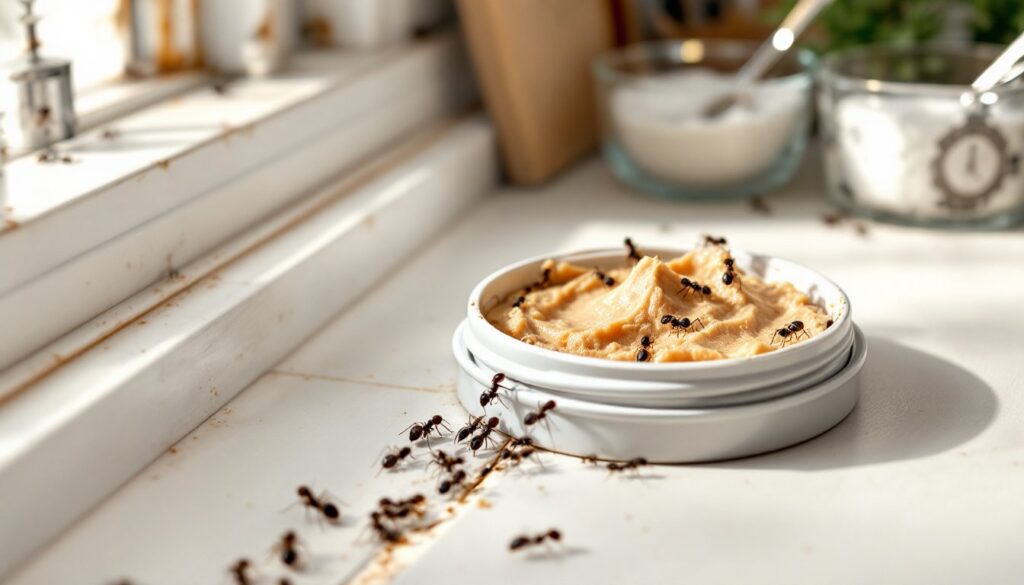
- Add just enough warm water to create a paste, about 2 to 3 tablespoons. You want it thick enough to stay in place but moist enough that ants can feed on it.
- Spoon small amounts (about a teaspoon each) onto small pieces of cardboard, jar lids, or shallow bottle caps. Place these near ant trails, entry points, or wherever you’ve seen activity.
- Replace the bait every 2 to 3 days, or sooner if it dries out or becomes contaminated with dead ants.
Many pest control guides recommend ratios anywhere from 1:1 to 1:9 borax to sugar. The 1:3 ratio hits the sweet spot, enough borax to kill, enough sugar to attract. Testing by homeowners and professionals alike has shown that too much borax can repel ants, while too little won’t eliminate the colony.
Liquid Borax Bait for Indoor Use
If you’re dealing with ants indoors and want a cleaner, spill-resistant option, a liquid borax and sugar ant killer works just as well:
- Combine 1 tablespoon borax, 1/2 cup sugar, and 1.5 cups warm water in a clean jar or bottle.
- Shake or stir until both the borax and sugar dissolve completely.
- Soak cotton balls in the solution and place them in shallow containers (like jar lids or plastic takeout containers with small entry holes cut in the sides).
- Position these near baseboards, under sinks, or along windowsills where ants enter.
The liquid version is especially useful for kitchens and bathrooms where paste baits might dry out quickly. It’s also easier to portion out if you’re treating multiple rooms. Just don’t let the liquid pool on finished wood or porous surfaces, it can leave a white residue as it dries.
Where to Place Borax Ant Bait for Maximum Results
Even the best homemade ant killer borax recipe won’t work if you put it in the wrong spot. Ants follow pheromone trails, so placement matters more than quantity.
Start by following the ants. Don’t just drop bait where you see a few stragglers, trace their path back to where they’re entering your house. Common entry points include:
- Cracks in foundation or slab (especially along exterior walls)
- Gaps around windows and door frames
- Utility penetrations where pipes, wires, or HVAC lines enter the building
- Weep holes in brick veneer (small rectangular gaps near the foundation)
Place bait stations within 6 to 12 inches of these entry points, but not directly on top of them. You want ants to find the bait on their way in or out, not bypass it entirely.
Outdoors, focus on:
- Ant mounds or nests (place bait in a ring around the mound, not on top of it)
- Tree trunks and stumps where ants forage for honeydew from aphids
- Mulch beds and landscape edging (common nesting sites for pavement ants)
- Trash can areas and compost bins
Don’t spray insecticide or cleaning products near your bait stations. Harsh chemicals will either kill the ants before they can carry the bait back or repel them from the area entirely. You want a clear, unobstructed path from the nest to the bait.
If you’re not seeing activity within 24 hours, move the bait. Ants are creatures of habit, they’ll stick to established trails unless resources dry up. Experts at natural pest control methods recommend checking multiple spots before assuming the recipe isn’t working.
Finally, be patient. It can take 3 to 7 days to see a noticeable drop in ant activity, and up to two weeks for complete colony elimination. During that time, you might actually see more ants at first, that’s a good sign. It means workers are recruiting others to the food source.
Safety Precautions When Using Borax Around Your Home
Borax is significantly less toxic than most commercial ant killers, but it’s not harmless. It’s rated as a low-toxicity substance by the EPA, meaning it won’t cause serious harm in small doses, but you still need to handle it responsibly.
Keep bait stations out of reach of children and pets. While borax won’t kill a dog or cat in the trace amounts present in bait, ingestion can cause nausea, vomiting, and diarrhea. If you have curious pets, place bait inside a bait station enclosure, you can buy commercial ones or DIY a version using a plastic takeout container with small entry holes (about 1/4 inch diameter) cut near the base. Ants can enter, but pets can’t access the bait.
Wear gloves when mixing and handling borax powder. Prolonged skin contact can cause irritation, especially if you have cuts or sensitive skin. If you get borax in your eyes, flush with water for 15 minutes and seek medical attention if irritation persists.
Don’t place bait directly on food-prep surfaces. Use disposable container lids, cardboard scraps, or dedicated bait trays that you’ll discard when the infestation is over. Wipe down countertops with soap and water after removing bait stations.
Store unused borax in its original container, tightly sealed, in a cool, dry place away from food and children. Label any pre-mixed bait solutions clearly so no one mistakes them for anything edible.
If you’re treating an ant problem in a home with small children, consider liquid bait in enclosed stations rather than open paste. It reduces the chance of accidental contact. And if you’re dealing with an infestation in a rental property, check your lease, some landlords require professional pest control and prohibit DIY treatments.
Borax is allowed for residential use in all 50 states, but disposal rules vary. Don’t pour large quantities of leftover liquid bait down the drain in areas with septic systems. Instead, let it evaporate in the container outdoors, then dispose of the residue with your regular trash.
Conclusion
A borax ant killer recipe isn’t a magic bullet, but it’s one of the few DIY solutions that consistently delivers results without costing a fortune or filling your home with harsh chemicals. Mix it right, place it strategically, and give it time to work through the colony. If you’re still seeing heavy activity after two weeks, you might be dealing with multiple colonies or a species that requires a different bait type, at that point, it’s worth consulting a licensed pest control professional. But for the typical spring invasion of sugar ants, borax and a little patience will get the job done.