Table of Contents
ToggleIf you’ve ever dealt with dog pee on carpet, hardwood, or upholstery, you know that standard cleaners don’t cut it. The stain might disappear, but the smell? It lingers. That’s because pet urine contains proteins and bacteria that conventional soaps can’t fully eliminate. Enzymatic cleaners work differently, they break down the organic compounds at a molecular level, eliminating odor instead of masking it. This guide walks homeowners through what enzymatic cleaners are, how they work, and how to use them correctly on every surface in your home. You’ll also learn the most common application mistakes and when a DIY solution makes sense versus grabbing a proven store-bought formula.
Key Takeaways
- Enzymatic cleaners for dog urine break down organic compounds at a molecular level by using live bacteria and enzymes, eliminating odor at the source rather than masking it.
- The enzymatic process requires several hours to 24 hours of dwell time in a moist state; rushing the dry time or scrubbing during this period stops the bacteria from digesting waste and allows odor to return.
- Different flooring types require different application approaches—carpet needs deep saturation to reach padding, sealed wood needs pH-neutral formula applied sparingly, and porous grout needs brush application with extended dwell time.
- Never use heat, bleach, ammonia, or alkaline detergents before or with an enzymatic cleaner, as these can denature enzymes, kill beneficial bacteria, and actually set protein-based stains permanently.
- Commercial enzymatic cleaners are significantly more effective than DIY solutions for serious or set-in stains because they contain lab-tested enzyme concentrations and targeted bacterial cultures specifically designed to break down urine compounds.
- For severe contamination that has soaked into subfloors, treating only the surface is insufficient—you may need to address the subfloor directly or use odor-blocking sealers to fully eliminate the problem.
What Makes Enzymatic Cleaners Different from Regular Pet Cleaners?
Standard pet cleaners rely on surfactants and fragrances to lift stains and cover smells. They’re effective on fresh spills, but they don’t neutralize the uric acid crystals that bond to porous materials like carpet backing, grout, and unsealed wood. Once those crystals dry, they reactivate with moisture or heat, bringing the odor back.
Enzymatic cleaners for dog urine contain live bacteria and enzymes, biological agents that digest urine proteins, urea, and uric acid. The enzymes act as catalysts, speeding up the breakdown process, while the bacteria consume the organic waste. This combination doesn’t just mask odor: it eliminates the source.
Most enzymatic formulas are non-toxic and safe for homes with kids and pets, though you should still ventilate the area during application. They won’t damage most surfaces when used correctly, but always test a small hidden spot first, especially on natural stone or untreated wood.
Unlike bleach or ammonia-based cleaners, which can actually set urine stains and encourage dogs to re-mark the same spot, enzymatic cleaners neutralize the scent markers that tell your dog “this is the bathroom.” That makes them doubly effective for housebreaking and accident cleanup.
How Enzymatic Cleaners Actually Break Down Dog Urine
Dog urine is more than just water. It contains urea, creatinine, uric acid, sodium, and various proteins. When it soaks into carpet or hardwood, the water evaporates, but the solids remain. Uric acid forms crystals that bond tightly to fibers and can survive traditional cleaning.
Enzymatic cleaners deploy specific enzymes, usually proteases (for proteins), amylases (for starches), and lipases (for fats), along with bacteria strains like Bacillus species. When you apply the cleaner, the enzymes break complex molecules into simpler compounds. The bacteria then consume these compounds as food, converting them into water and carbon dioxide.
This process is called bioremediation, and it takes time. While a standard cleaner works in minutes, an enzymatic cleaner for dog pee needs several hours, sometimes up to 24, to fully digest the contamination. That’s why most instructions tell you to saturate the area and let it air-dry naturally. Scrubbing or rinsing too soon interrupts the enzymatic action.
Temperature and pH also matter. Enzymes work best at room temperature (60–80°F) and in slightly acidic to neutral conditions. Mixing enzymatic cleaners with alkaline soaps or hot water can denature the enzymes, rendering them useless. If the stain is old and set, you may need multiple applications as the enzymes work through layered contamination.
Choosing the Right Enzymatic Cleaner for Your Flooring Type
Not all enzymatic cleaners are formulated the same, and your flooring type dictates which product, and application method, will work best.
Carpet and area rugs: Look for a best enzyme carpet cleaner for dog urine that penetrates deep into carpet backing and padding. Stains often soak through the visible surface into the subfloor, so you need a formula that can reach 1–2 inches down. Products designed for carpet usually come in spray bottles or gallon jugs with higher enzyme concentrations. For set-in stains, saturation is key, use enough cleaner to match the volume of the original accident.
Hardwood and laminate: Enzymatic cleaner for dogs on sealed wood floors should be pH-neutral to avoid dulling the finish. Apply sparingly and don’t let it pool: standing liquid can seep into seams and cause warping. For unfinished or oil-finished hardwood, test first, some formulas can darken the grain. Wipe excess after 10–15 minutes, then let the treated area air-dry.
Tile and grout: Porous grout soaks up urine quickly. Use an enzymatic urine cleaner with a brush applicator to work the solution into grout lines. Let it dwell for at least 20 minutes. You may need a follow-up treatment if the grout wasn’t sealed.
Upholstery and couches: An enzymatic cleaner for couch fabrics should be safe for the specific material, check tags for cleaning codes (W for water-based, S for solvent, SW for either). Blot, don’t rub, and use just enough product to saturate the stain without soaking the cushion foam. Many households dealing with pet odor challenges find that thorough saturation is critical for upholstery.
Concrete and subfloors: Unsealed concrete is highly porous. Use a heavy-duty enzymatic cleaner for dog poop or urine and apply generously. Cover the area with plastic sheeting to slow evaporation and extend enzyme contact time.
Step-by-Step: How to Use Enzymatic Cleaner for Maximum Results
Proper application makes the difference between a clean floor and a recurring odor problem. Follow these steps for any surface.
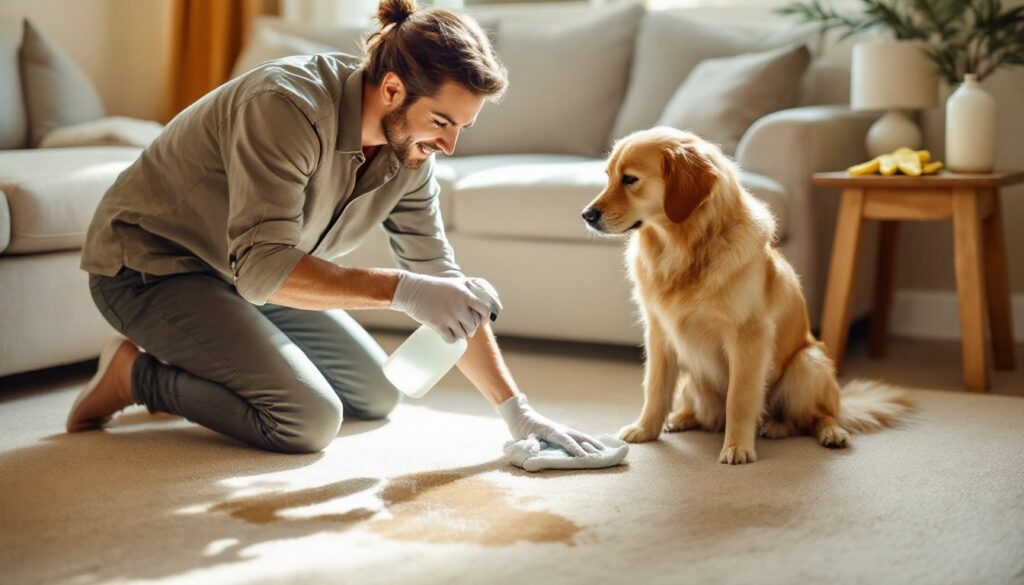
1. Blot fresh accidents immediately. Use paper towels or a clean cloth to absorb as much liquid as possible. Press firmly, don’t rub. For carpet, stand on the towels to wick urine from the padding.
2. Remove solids if applicable. For an enzymatic cleaner for dog poop, scrape up solids with a putty knife or disposable spatula. Dispose of waste in a sealed bag.
3. Rinse the area (optional, depending on product). Some enzymatic cleaners work best on untreated stains: others recommend a light water rinse first. Check the label.
4. Saturate the stain thoroughly. Apply enough best enzymatic cleaner for dog urine to reach the full depth of contamination. For carpet, that means soaking through to the padding. For hard surfaces, cover the stain completely.
5. Let it dwell. This is the most critical step. Leave the cleaner in place for the time specified on the label, usually 10 minutes to several hours. For old or severe stains, overnight contact works best. Don’t walk on the area or blot it dry early.
6. Allow natural air-drying. Enzymes need moisture to work, so don’t use fans, heat, or extraction equipment until the biological process is complete. If the area dries too quickly, mist it lightly with water to reactivate the enzymes.
7. Assess and repeat if needed. Once dry, check for remaining odor. If you still smell urine, apply a second treatment. Layered or old stains often need 2–3 applications.
8. Extract or vacuum (for carpet). After the final treatment has dried, vacuum the area to lift any residue or crystallized salts left behind.
Always wear nitrile gloves when handling pet waste and enzymatic cleaners, and ensure good ventilation during application.
Common Mistakes That Make Dog Urine Stains Worse
Even the best enzyme carpet cleaner for dog urine won’t work if you undermine the process. Here are the most frequent missteps homeowners make.
Using steam cleaners or hot water first. Heat sets protein-based stains, bonding them permanently to carpet fibers. If you’ve already steam-cleaned a urine spot, you may have locked in the odor. Always use enzymatic treatment before heat extraction.
Mixing enzymatic cleaners with other products. Bleach, vinegar, ammonia, and alkaline detergents can kill the live bacteria and deactivate enzymes. If you’ve pre-treated with another cleaner, rinse thoroughly and let the area dry before applying the enzymatic formula.
Not using enough product. A light spritz won’t reach urine that’s soaked into carpet padding or subfloor. You need to match the contamination volume. For a large accident, that might mean a full cup of cleaner on a single spot.
Scrubbing or blotting during the dwell time. This removes the enzymes before they finish working. Let the area sit untouched.
Rushing the dry time. Enzymatic action continues as long as the cleaner stays moist. Forced drying halts the bacteria, leaving partially digested waste behind. Odor returns once humidity or pet body heat reactivates the crystals. Experts at publications focused on household cleaning methods stress patience during enzymatic treatments.
Ignoring the subfloor. If urine has soaked through carpet into plywood or concrete, surface treatment alone won’t solve the problem. You may need to pull back carpet and treat the subfloor directly, or in severe cases, replace contaminated padding and seal the subfloor with an odor-blocking primer like BIN shellac-based sealer.
Reintroducing the dog too soon. Dogs are drawn back to spots that still carry scent markers. Keep pets away from treated areas until the cleaner has fully dried and the odor is gone, usually 24–48 hours.
DIY vs. Store-Bought: When to Make Your Own Enzymatic Solution
Homemade enzymatic cleaners are possible, but they’re not always practical or effective for serious dog urine problems.
DIY enzymatic cleaner basics: Most recipes combine citrus peels, brown sugar, water, and yeast. The mixture ferments over several weeks, producing enzymes and beneficial bacteria. It’s inexpensive and works reasonably well on light, fresh stains or general-purpose cleaning.
But, DIY formulas are inconsistent. Enzyme concentrations vary based on fermentation conditions, and there’s no way to test potency at home. For old, set-in stains or porous surfaces like carpet padding, a homemade batch often lacks the enzyme diversity and bacterial load needed for complete remediation.
When to buy commercial: If you’re dealing with recurring accidents, large stains, or contamination that’s soaked into subfloors, invest in a proven store-bought dog enzymatic cleaner. Commercial formulas are lab-tested for specific waste types (urine, feces, vomit) and contain targeted enzyme blends, proteases for proteins, ureases for urea, etc., that DIY recipes can’t match.
Look for products that list live bacterial cultures and multi-enzyme formulas on the label. Brands marketed specifically as a best enzymatic cleaner for dog urine typically include surfactants to help the solution penetrate fabrics, plus odor encapsulators that work while enzymes do their job.
When DIY makes sense: If you’re treating minor messes on hard, non-porous surfaces (tile, sealed concrete, vinyl), or if you want a maintenance cleaner for routine mopping, a homemade solution can supplement your toolkit. It’s also useful for pre-treating laundry (pet bedding, towels) before washing.
Just don’t rely on DIY for critical odor problems. The time and repeated applications usually cost more than buying a gallon of commercial cleaner. Many homeowners find guidance on versatile cleaning solutions helpful when deciding between DIY and commercial options.
Conclusion
Enzymatic cleaners are the most effective tool homeowners have for truly eliminating dog urine odor and stains, not just covering them up. Success comes down to choosing the right product for your flooring, applying enough to reach the full depth of contamination, and giving the enzymes time to work. Avoid common mistakes like using heat or mixing with other chemicals, and don’t hesitate to retreat stubborn spots. For severe or widespread contamination, you may need to address subfloors or call in a professional restoration service, but for most household accidents, a quality enzymatic cleaner and patience will get your floors odor-free.