Table of Contents
ToggleUpgrading your laundry room isn’t just about replacing old appliances, it’s about choosing equipment that’ll last 20+ years without constant service calls. Miele washer and dryer units consistently rank among the longest-lasting laundry machines on the market, with a design life rated for 10,000 load cycles compared to the industry standard of 3,000-5,000. That’s not marketing fluff: it’s German engineering backed by commercial-grade components and nearly a century of appliance manufacturing experience. Whether you’re planning a full laundry room renovation or just swapping out unreliable machines, understanding what sets Miele apart, and whether the premium price justifies your specific needs, requires a practical look at construction, installation requirements, and real-world maintenance.
Key Takeaways
- Miele washer dryer units are engineered to last 20+ years with a rated design life of 10,000 load cycles—more than double the 3,000–5,000 cycles of standard washers—thanks to stainless steel construction and commercial-grade components.
- TwinDos automatic detergent dispensing prevents overdosing and guesswork, though it requires proprietary Miele cartridges; manual dispensing via drawer remains an option for those who prefer flexibility.
- A Miele washer and dryer set costs $2,600–$3,800 upfront but achieves break-even around year 12–15 compared to two replacements of mainstream brands, plus saves $30–50 yearly on water and electricity.
- The smaller drum capacity (2.26 cu ft) and longer cycle times make Miele washers better suited for delicate and technical fabrics than heavy-duty or high-volume laundry loads.
- Monthly cleaning cycles and quarterly maintenance of the dispenser, drain pump filter, and water inlet screens are essential to prevent early failures and preserve Miele’s longevity advantage.
- Heat-pump dryer models use 40–50% less electricity than traditional vented dryers and can run on standard 120V household circuits, simplifying installation for retrofit projects.
What Makes Miele Washer Dryers Stand Out?
Miele washer dryer machines separate themselves from mainstream brands through three core differences: build quality, longevity testing, and component-level engineering. While most residential washers use plastic tubs and polymer drums, Miele employs stainless steel construction throughout the wash chamber and uses honeycomb drum patterns that create a thin water film to cushion fabrics during the spin cycle. This reduces wear on both clothes and the machine itself.
Every Miele unit undergoes 10,000-cycle endurance testing before leaving the factory, equivalent to washing five loads per week for 20 years. That’s significantly more rigorous than the 3,000-5,000 cycle standard for conventional machines. The company also manufactures its own motors, pumps, and controls rather than sourcing commodity components, which explains both the higher upfront cost and lower failure rates.
Another practical advantage: Miele integrated washer dryer models offer quieter operation than most competitors, typically running at 49-52 dB during washing and 65-68 dB during spinning. For comparison, normal conversation registers around 60 dB. If your laundry area sits near living spaces or bedrooms, this noise differential matters more than spec sheets suggest.
Key Features and Technology
TwinDos automatic dispensing is Miele’s standout feature. Instead of pouring detergent into a drawer, you install proprietary detergent cartridges (UltraPhase 1 and 2) that the machine precisely doses based on load size and soil level. Each cartridge handles about 50 loads. While this system reduces guesswork and prevents overdosing, which can shorten machine life by leaving residue in pumps and hoses, it locks you into Miele’s detergent ecosystem. You can bypass it and use the manual drawer, but that negates one of the key convenience upgrades.
CapDosing lets you insert single-dose capsules for specialized treatments: wool care, down refreshing, outdoor fabric treatments, or silk conditioning. Think of it like a Keurig system for laundry additives. It’s genuinely useful if you regularly wash technical fabrics or delicate items that need specific care products.
PowerWash technology uses sensor-controlled water levels and spray patterns to reduce water consumption without sacrificing cleaning performance. Independent testing shows Miele front-loaders average 13-16 gallons per load compared to 20-25 gallons for many conventional washers. On a 300-load-per-year household, that’s roughly 2,400 gallons saved annually, enough to matter on your water bill if you’re on municipal metered service.
The SteamCare and FragranceDos features are secondary conveniences. Steam reduces wrinkles and refreshes lightly worn items without a full wash, while FragranceDos releases scent beads during the final rinse. Neither is essential, but both add legitimate utility if your household values those functions.
Top Miele Washer Dryer Models for Homeowners in 2026
Miele WWH860 WCS is the current flagship front-load washer. It features a 2.26 cubic foot capacity (smaller than many U.S. machines, which typically run 4.5-5.0 cu ft), TwinDos dispensing, WiFi connectivity, and QuickIntenseWash for a complete cycle in under an hour. Expect to pay $1,700-$1,900 depending on finish options. Pair it with the TWF760 WP heat-pump dryer for the most energy-efficient setup: heat-pump models use 40-50% less electricity than traditional vented dryers by recycling heated air.
Miele WWB020 WCS is the volume model for most homeowners. It drops TwinDos and WiFi but retains the honeycomb drum, 10,000-cycle build quality, and PowerWash technology. Pricing typically sits around $1,300-$1,400. This is the most cost-effective entry point if you don’t need automatic dispensing and are comfortable using the detergent drawer manually.
For tight installations, consider the Miele washer dryer combo units like the WTD163 WCS. These all-in-one machines wash and dry in the same drum, eliminating the need for transferring loads. Combo units fit standard 24-inch European-style alcoves and work well in condos, apartments, or second-floor laundry closets where venting isn’t feasible. The tradeoff: drying capacity is typically 50% of wash capacity (so a machine rated for 8 kg wash will dry 4 kg), and full wash-dry cycles take 4-6 hours. If you’re washing large bedding or doing multiple back-to-back loads, separate machines make more sense.
All current Miele models carry Energy Star certification and meet CEE Tier III efficiency standards. They’re also compatible with 120V/60Hz household circuits, though some larger models perform better on dedicated 20-amp circuits to handle the heating elements in dryers without tripping breakers.
Installation and Space Requirements
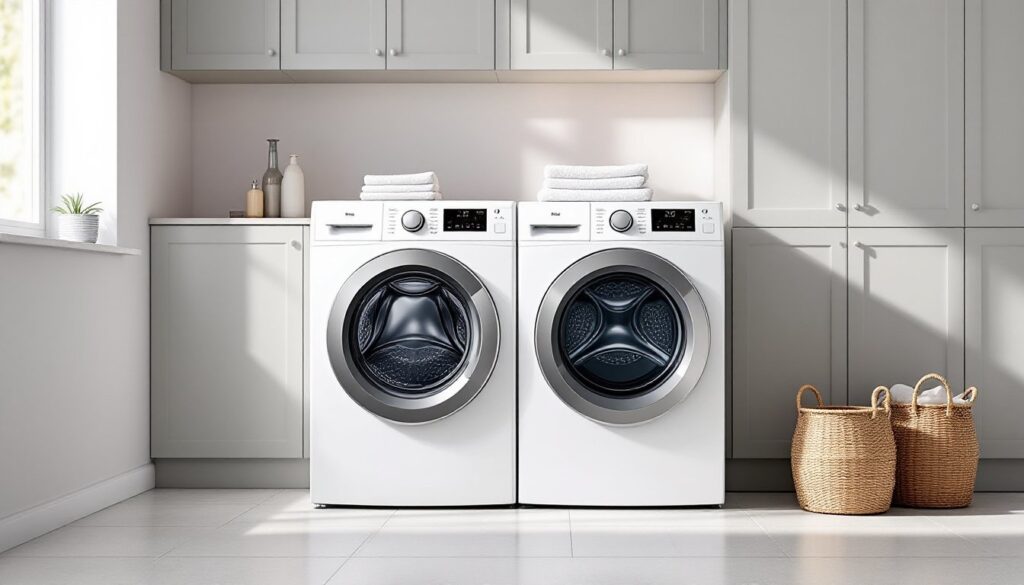
Miele washer and dryer units typically measure 24 inches wide (European standard) or 27 inches wide (U.S. market models). Depth runs 24-26 inches without hoses, but add 4-6 inches for connections and airflow clearance. Height is 33-34 inches for freestanding units, or 80-82 inches if you’re installing them in a stacked configuration with the factory stacking kit.
Most installations require:
• Water supply: Standard 3/4-inch hot and cold supply lines with shutoff valves. Miele recommends brass or stainless-steel braided hoses, not the reinforced rubber type that fails every 3-5 years.
• Drain: 1.5-inch standpipe or laundry sink with P-trap, minimum 34 inches tall, maximum 96 inches (check your model’s spec sheet for exact range).
• Electrical: Washers use 120V/15A. Most dryers need 240V/30A with a NEMA 14-30 plug (four-prong). Heat-pump dryers can run on 120V, which simplifies retrofit installations.
• Ventilation: Vented dryers need 4-inch rigid or semi-rigid ducting with a maximum run determined by the number of elbows (typically 25-35 feet for straight runs, minus 5 feet per 90-degree turn). Heat-pump and condensing dryers don’t require external venting but need adequate room ventilation to dissipate moisture.
If you’re replacing a top-load washer with a Miele integrated washer dryer unit, you may need to reconfigure plumbing. Top-loaders often use fill hoses that connect from behind, while front-loaders prefer side or rear connections depending on cabinetry. Budget 2-3 hours for installation if you’re comfortable with basic plumbing, or hire a licensed plumber if local code requires it (some jurisdictions mandate permits for any appliance installation involving new water or drain connections).
Pro tip: Miele machines don’t self-level as easily as some brands. Use a torpedo level on both front-to-back and side-to-side planes, and adjust the threaded feet until the bubble centers. Out-of-level installation causes excessive vibration, drum wear, and premature bearing failure. Many home maintenance checklists include periodic releveling as appliances settle over time.
Maintenance Tips to Extend Your Miele’s Lifespan
Even a 20-year-rated machine needs routine care. Skipping these tasks is the most common reason for early failures:
Monthly:
• Run the Clean Machine cycle (or a hot wash with no load and a cup of white vinegar) to remove detergent buildup from the drum, gaskets, and internal hoses. Residue accumulation is the leading cause of pump clogs and mildew smells.
• Wipe down the door gasket with a dry cloth after the last load of the day. Standing water in the folds breeds mold, especially in front-loaders.
Quarterly:
• Remove and clean the detergent dispenser drawer. Soak it in warm water and scrub corners with an old toothbrush.
• Check the drain pump filter (usually behind a small access panel at the bottom front). You’ll find lint, coins, and occasionally small socks. A clogged filter reduces draining efficiency and strains the pump motor.
• Inspect inlet screens on the water supply hoses. Sediment from municipal water or well systems can restrict flow and cause fill errors.
Annually:
• Inspect the drain hose for kinks or clogs. Replace it if it’s cracked or brittle, rubber degrades over time, especially in unconditioned spaces like garages.
• For vented dryers, disconnect the duct and vacuum it thoroughly using a dryer vent cleaning kit or a shop vac with a long flexible attachment. Lint buildup is a fire hazard and reduces drying efficiency. Non-vented heat-pump dryers have internal lint filters and condensers that need vacuuming per the owner’s manual.
• Check the leveling. Floors settle, especially in homes built on pier-and-beam or slab foundations.
TwinDos users: Replace detergent cartridges when the display prompts you (typically every 2-3 months depending on usage). Don’t let them run dry: the system primes itself with each cycle, and running it empty can introduce air into the dosing pump.
If you’re managing multiple appliances in a full home setup, integrating these tasks into your regular seasonal maintenance routine alongside HVAC filter changes and water heater flushing keeps everything running smoothly.
Is a Miele Washer Dryer Worth the Investment?
The math depends on your replacement cycle and repair tolerance. A mainstream washer-dryer pair costs $800-$1,200 and typically lasts 8-12 years before major components (transmission, motor, control board) fail. A Miele washer and dryer set runs $2,600-$3,800 but is engineered for 20+ years.
Over a 20-year span:
• Mainstream brands: Two full replacements = $1,600-$2,400 + disposal fees + reinstallation labor.
• Miele: One purchase at $2,600-$3,800, potentially zero replacements.
Break-even happens around year 12-15, assuming no major repairs on either system. Factor in Miele’s lower water and energy consumption (roughly $30-50/year savings depending on local utility rates), and the total cost of ownership begins to favor premium machines, especially for households that run 6+ loads per week.
That said, Miele isn’t the right choice for everyone:
Skip it if:
• You’re in a rental or plan to move within 5 years (you won’t recoup the cost).
• You routinely wash heavily soiled work clothes, pet bedding, or muddy sports gear. Miele’s smaller drum capacity and European wash cycles prioritize efficiency over heavy-duty cleaning.
• You need same-day turnaround on large loads (king comforters, multiple bath towels). The smaller capacity and longer cycle times can bottleneck high-volume laundry days.
Choose it if:
• You value quiet operation and your laundry area is near living spaces.
• You’re renovating for the long term and want to minimize future appliance swaps.
• You care about water efficiency (well water users, drought-prone regions, or high municipal rates).
• You regularly wash delicate or technical fabrics that benefit from precise water temps and gentle drum action.
Many smart laundry appliances now offer WiFi connectivity and app controls, but Miele’s implementation focuses on cycle monitoring and maintenance reminders rather than gimmicky features. If you’re comparing across brands, weigh connectivity features against build quality, remote start is less valuable than a machine that doesn’t need service calls.
Conclusion
Miele washer dryer machines deliver what most homeowners say they want, appliances that last, but at a price point that requires honest assessment of your laundry habits and timeline. If you’re planning to stay in your home for a decade or more and run enough loads to justify the upfront cost, the engineering and build quality hold up under scrutiny. Just don’t expect miracles with oversized loads or same-day marathon washing sessions: these machines optimize for longevity and efficiency, not speed or capacity. Measure your space carefully, budget for professional installation if plumbing or electrical work exceeds your skill level, and commit to the quarterly maintenance tasks that keep any high-performance appliance running as designed.