Table of Contents
ToggleBathroom vanities aren’t just cabinets with sinks, they set the tone for the entire room and dictate how functional the space feels every morning. The 36 inch bathroom vanity has become the go-to standard for good reason: it offers enough counter space and storage for daily use without overwhelming smaller bathrooms or eating up square footage in larger ones. Whether someone’s renovating a guest bath, upgrading a master, or tackling a flip, understanding what makes a 36-inch unit tick, from mounting height to material durability, saves headaches down the line.
Key Takeaways
- A 36 inch bathroom vanity is the standard choice for most bathrooms because it offers sufficient counter space and storage while fitting rooms of 40 to 60 square feet without overwhelming the space.
- Mount a 36-inch vanity at comfort height (36 inches) to reduce back strain, and ensure 21 inches of clear floor space in front per building codes.
- Single-sink vanities at 36 inches work best with undermount, drop-in, or vessel styles; true double-sink configurations require at least 48 inches of width.
- Plywood box construction with dovetail joints and a moisture-resistant interior is more durable than particleboard, especially in bathrooms with inconsistent ventilation.
- Soft-close drawer slides with ball-bearing mechanisms and full-extension capability provide long-term durability and easier access to stored items.
- DIY installation is feasible for freestanding models, but floating 36-inch vanities require wall studs and blocking to safely support 100 to 150 pounds, and a permit may be needed if plumbing or electrical work is involved.
Why a 36 Inch Vanity Is the Sweet Spot for Most Bathrooms
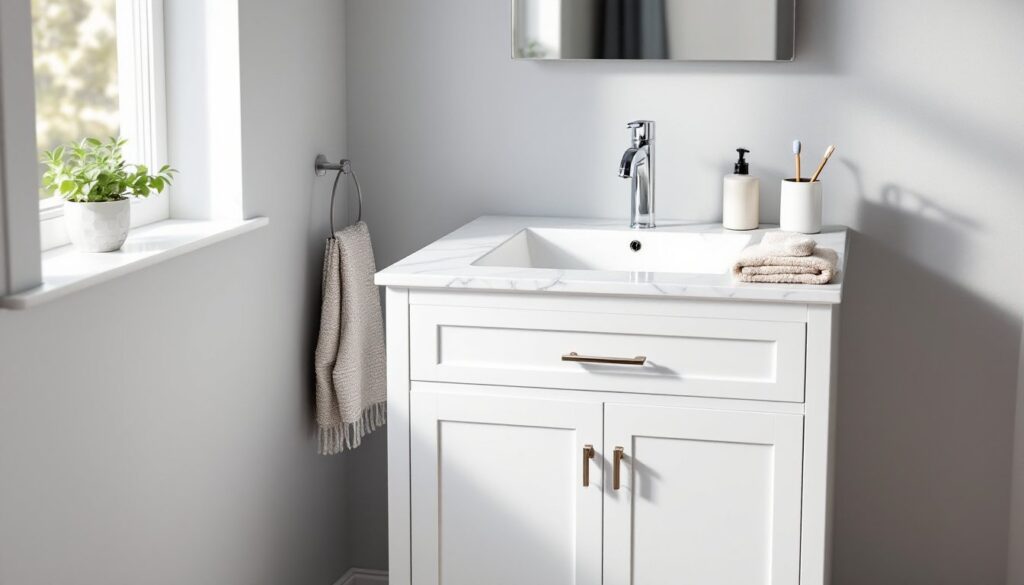
A 36 inch vanity fits bathrooms ranging from about 40 to 60 square feet, which covers most secondary baths and many primary suites built in the last 30 years. It’s wide enough to accommodate a single undermount or vessel sink with 6 to 12 inches of counter space on either side, enough room for a soap dispenser, toothbrush holder, and small tray without crowding.
Standard vanity depth runs 21 to 22 inches, though some wall-mounted or pedestal-style units sit closer to 18 inches to save floor space in tight layouts. Height typically lands at 32 to 36 inches (without the countertop), but comfort height models at 36 inches are increasingly common and reduce back strain for taller users.
From a plumbing standpoint, most homes have drain and supply lines centered around 18 inches from the side wall, which pairs cleanly with a 36-inch cabinet. That means less pipe rerouting during installation, a real cost saver if someone’s doing the work themselves or hiring a handyman instead of a full plumber.
Rooms smaller than 40 square feet might do better with a 24- or 30-inch vanity to maintain clearance codes. The International Residential Code (IRC) requires at least 21 inches of clear space in front of any fixture, and 30 inches side-to-side from the sink centerline. A 36-inch unit respects those minimums in most layouts without forcing awkward door swings or tight squeezes past the toilet.
Top Styles and Design Options to Match Your Space
Freestanding vanities remain the most popular choice, they sit on the floor like furniture, offer enclosed storage, and come in everything from modern slab-door designs to traditional raised-panel fronts. These work in nearly any bathroom and don’t require wall reinforcement beyond what’s already there for plumbing.
Floating (wall-mounted) vanities open up visual space and make floor cleaning easier, but they demand solid blocking or studs behind the drywall to support the weight, typically 100 to 150 pounds loaded. If the bathroom has metal studs or the vanity needs to land between studs, install a horizontal 2×8 or 2×10 cleat during framing (or open the wall to add one). Don’t skip this: drywall anchors alone won’t hold a stone countertop and a drawer full of hair tools.
Farmhouse or apron-front vanities echo kitchen trends with visible front panels and open or basket storage below. They suit casual, cottage, or transitional styles but sacrifice some cabinet space compared to fully enclosed models.
For finish options, painted wood (often poplar or MDF with a catalyzed conversion varnish) dominates the market in whites, grays, and navy. Solid wood (oak, maple, walnut) shows grain and handles moisture well if properly sealed. Thermofoil or laminate cabinets cost less and resist peeling in humid environments better than older vinyl wraps, but they can’t be sanded and refinished if damaged.
Single vs. Double Sink: What Works Best at 36 Inches
A 36-inch vanity is strictly single-sink territory. Manufacturers don’t make true double-bowl vanities under 48 inches, anything labeled “double” at 36 inches is either using tiny bar-sink bowls (impractical for washing faces or rinsing toothbrushes) or cramming two vessels so close together that faucet spacing becomes a problem.
Single sinks at this width can be undermount, drop-in, or vessel style. Undermount sinks (mounted below the counter) make wiping debris into the bowl easier and pair well with quartz or solid-surface tops. Vessel sinks sit on top and add 5 to 7 inches of height, factor that into mirror and sconce placement, or someone will be staring at their collarbone instead of their face. Drop-in sinks work with laminate or tile counters where cutting a precise undermount opening isn’t feasible.
If two people need to use the bathroom simultaneously, a 48- to 60-inch double vanity makes more sense than forcing a 36-inch unit to do double duty.
Choosing the Right Materials and Finishes
Plywood box construction with dovetail or doweled joints holds up better than particleboard, especially in bathrooms with inconsistent ventilation. Check the cabinet interior, if it’s unfinished particleboard, moisture will eventually cause swelling at the sink cutout. A melamine or laminate interior adds a moisture barrier and wipes clean.
Countertop material drives cost and durability. Quartz (engineered stone) runs $60 to $120 per square foot installed and resists stains and etching without sealing. Granite costs similarly but requires annual sealing to prevent water spots. Marble looks elegant but etches from toothpaste and cosmetics, reserve it for low-traffic powder rooms. Solid surface (Corian-type materials) can be repaired and resealed by a pro if scratched, and laminate ($10 to $40 per square foot) works for budget builds but shows wear at the edges over time.
For countertops purchased separately, a standard 37-inch slab covers a 36-inch cabinet with a 1-inch overhang on the ends and 0.5 inches in front. Many home renovation cost guides break down regional material pricing and labor rates to help set realistic budgets.
Hardware (knobs, pulls) should mount with screws long enough to penetrate at least 0.75 inches into the door or drawer front. Cheap hardware uses short machine screws that strip out of particleboard or MDF within months. Solid brass, stainless, or zinc alloy with a physical vapor deposition (PVD) finish resists corrosion in humid environments.
Drawer boxes with soft-close, undermount slides rated for 75 to 100 pounds outlast side-mount or center-mount slides. Ball-bearing slides are quieter and smoother than rollers, and full-extension models let someone reach items at the back without pulling the drawer off the track.
Storage Solutions and Configuration Tips
Two-door, two-drawer layouts are common: upper drawers for small items (makeup, razors, medication) and a lower cabinet with a shelf for larger bottles and cleaning supplies. Three- or four-drawer stacks maximize vertical storage and eliminate the need to crouch, but they cost more and require taller cabinet boxes, check that the vanity height works with existing plumbing before ordering.
Pullout trays or lazy susans inside the cabinet make corner or deep spaces accessible. A tip-out tray installed behind the faux drawer front at the sink can hold sponges or soap without cutting into main storage.
If the bathroom has an offset drain (not centered), some vanities ship with removable or adjustable shelves to route pipes without custom cutting. Measure the drain centerline before ordering, most vanities assume a centered drain at 18 inches from either side.
Toe-kick height should be 3 to 4 inches for comfortable standing. Vanities without a toe-kick (furniture-style feet) can feel awkward to lean over and make mopping underneath a chore.
Keep electrical outlets at least 6 inches to the side of the sink and GFCI-protected per NEC Article 210.8. If the vanity has drawers, make sure outlet boxes don’t sit where a drawer would hit them, relocate if necessary before drywall goes up.
Installation Essentials: DIY or Hire a Pro?
A competent DIYer can install a freestanding vanity with basic plumbing skills, a level, a drill, and a few hours. Wall-mounted units require confident stud-finding and possibly opening drywall to add blocking, if that’s intimidating, call in help.
Shut off water at the fixture shutoff valves or the main if there aren’t any. Disconnect the P-trap and supply lines, then remove the old vanity. Check the wall for water damage or mold behind the old backsplash: now’s the time to repair sheathing or drywall, not after the new vanity is in.
Level the floor if necessary. Shim under the vanity to prevent rocking, which can crack a stone countertop over time. Secure freestanding vanities to the wall with 2.5- or 3-inch screws driven into studs, this prevents tipping if someone leans on the counter.
For floating vanities, locate studs and mark the ledger height (typically 20 to 22 inches above the finished floor for a 36-inch-tall vanity). Attach the mounting rail or French cleat with 3-inch construction screws into studs at 16 inches on center. Use a 4-foot level, a short torpedo level won’t catch a subtle slope across 36 inches.
Plumbing connections: Use new braided stainless supply lines, old corrugated copper or vinyl lines are more prone to leaks. Hand-tighten, then go another quarter-turn with a wrench. Overtightening cracks plastic or brass fittings. Apply pipe thread sealant or Teflon tape (wrap clockwise, three passes) to threaded metal fittings, but not to compression fittings.
If the new sink sits higher or lower than the old one, the drain tailpiece or P-trap extension may need adjusting. Keep the P-trap water seal between 2 and 4 inches, too shallow and sewer gas escapes: too deep and it drains slowly.
Permits typically aren’t required for vanity replacement if no new plumbing or electrical runs are added. Moving a drain or adding a junction box usually requires a permit and inspection. Local codes vary, so check with the building department if making structural or system changes.
Budget-Friendly Shopping Guide and Where to Buy
Big-box stores (Home Depot, Lowe’s) stock ready-to-assemble (RTA) and pre-assembled vanities in the $200 to $800 range with countertops. Quality varies, inspect drawer slides, door hinges, and cabinet thickness in person. These stores often run holiday sales (Memorial Day, Black Friday) with 20 to 30 percent discounts.
Online retailers (Wayfair, Overstock, Amazon) offer wider style selection and sometimes better pricing, but shipping damage is common with stone tops. Check return policies and whether curbside or white-glove delivery is included. A 200-pound vanity with a quartz top isn’t a one-person unload.
Specialty bath showrooms carry higher-end lines (Kohler, American Standard, Restoration Hardware) with better cabinet joinery and finish options. Expect $800 to $2,500 for a quality 36-inch vanity with top. Some offer design consultation and will coordinate with a contractor if the project is part of a larger remodel. Browsing design sourcebooks and curated product guides can surface options that don’t appear in big-box catalogs.
Outlet and surplus stores sometimes have overstock or discontinued models at steep discounts. Verify all hardware and parts are included, returns are often limited.
Used or salvage vanities can work for budget builds, but check for water damage, worn drawer slides, and outdated plumbing that might not fit modern fittings. Refinishing and updating hardware adds cost and time.
For broader inspiration and to compare styles across brands, many homeowners browse a range of 36-inch bathroom vanities before narrowing down materials and finishes. Filtering by finish, sink type, and mounting style helps focus the search without getting overwhelmed by thousands of options.